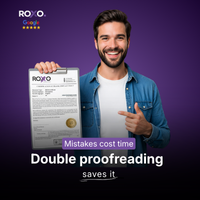

When it comes to certified document translation, accuracy is not optional — it’s mandatory. A single typo, mistranslated term, or formatting error can result in document rejection, processing delays, or even legal complications.
That’s why at Roxo Translations, every document goes through a double proofreading process, ensuring unmatched quality, compliance, and peace of mind.
In this article, you’ll learn:
What double proofreading really means
Why it’s essential for certified translations
How it prevents costly mistakes
When it matters most
How to choose a translation service that truly protects you
What Is Double Proofreading in Translation?
Double proofreading is a two-step quality assurance process applied after the initial translation is completed.
Here’s how it works:
First Proofreading:
A certified translator reviews the translated document for linguistic accuracy, terminology, grammar, and formatting.Second Proofreading:
A different qualified linguist conducts a second review to identify inconsistencies, errors, or compliance issues that may have been overlooked.
This layered approach drastically reduces the risk of errors and ensures that the final document meets official standards.
Why Is Double Proofreading Critical for Certified Translations?
Certified translations are often submitted to:
USCIS
Courts
Universities
Government agencies
Embassies
Licensing boards
These institutions expect absolute accuracy.
Even small issues such as:
Incorrect names
Date formatting errors
Inconsistent terminology
Missing accents or diacritics
can lead to rejection or delays.
Double proofreading ensures:
✔ Legal and institutional compliance
✔ Linguistic precision
✔ Consistent terminology
✔ Professional presentation
Common Documents That Require Double Proofreading
Double proofreading is especially critical for:
Birth certificate translations
Marriage and divorce certificates
Immigration documents
Academic transcripts and diplomas
Driver’s license translations
Legal contracts
Court documents
These documents carry legal weight and must be flawless.
Errors That Single Proofreading Often Misses
Many low-cost translation services rely on a single review — or none at all.
Common errors include:
Literal translations that distort meaning
Inconsistent spelling of names
Formatting that doesn’t match the original document
Incorrect legal terminology
Missing certification statements
Double proofreading catches these issues before submission, saving time and money.
Double Proofreading vs. Automated Tools
Online translators and AI tools may seem convenient, but they:
Lack legal context
Miss cultural nuances
Cannot certify documents
Do not ensure compliance
Double proofreading by certified professionals remains the gold standard for official translations.
How Double Proofreading Improves Acceptance Rates
Documents reviewed twice are:
More accurate
More consistent
More compliant
This results in:
✔ Faster approvals
✔ Fewer resubmissions
✔ Lower risk of rejection
For immigration, legal, or academic purposes, this can make a significant difference.
Roxo Translations’ Quality Assurance Process
At Roxo Translations, our workflow includes:
Certified professional translation
First proofreading by a qualified linguist
Second proofreading by an independent reviewer
Final compliance and formatting check
This ensures every document meets USCIS and international standards.
How to Choose a Translation Service with Real Quality Control
Ask these questions:
Do you offer double proofreading?
Are your translators certified?
Do you guarantee acceptance?
Do you specialize in certified translations?
If the answer isn’t clear — that’s a red flag.
Final Thoughts
When your future depends on a document, accuracy matters.
Double proofreading is not an extra — it’s a necessity.
Choosing a translation service that prioritizes quality protects your time, money, and peace of mind.
Related topics: certified document translation | birth certificate translation services | USCIS certified translation | professional document translation | legal document translation
Related article:
Certified Translations for USCIS: Everything You Need to Know











 Iniciar Conversa
 Faça Seu Pedido