Did you know that a single mistake in your marriage certificate translation can delay or even jeopardize your immigration process?
Many people only realize the importance of a certified translation after receiving a request for additional evidence or facing unexpected delays. Understanding this requirement in advance can save time, money, and unnecessary stress.
In this article, we explain why a certified marriage certificate translation is essential, the most common mistakes to avoid, and how to ensure your document is accepted without complications.
Contents
- What Is a Certified Translation?
- Why Does a Marriage Certificate Require a Certified Translation?
- Common Mistakes That Delay Applications
- What Must Be Included in a Certified Marriage Certificate Translation?
- Does a Certified Translation Need to Be Notarized?
- Why Working With a Specialized Translation Company Matters
- Roxo Translations’ Expertise
What Is a Certified Translation?
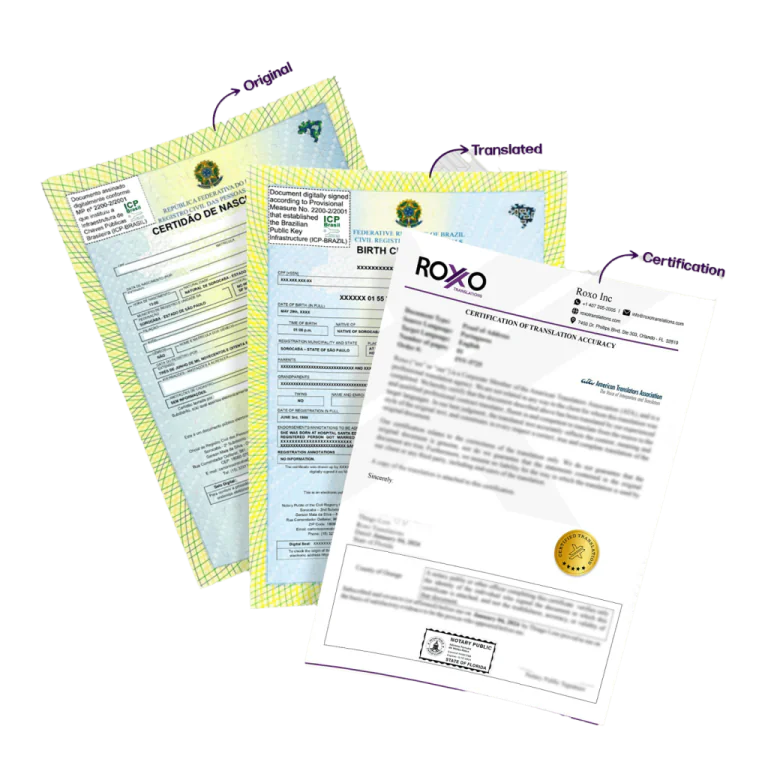
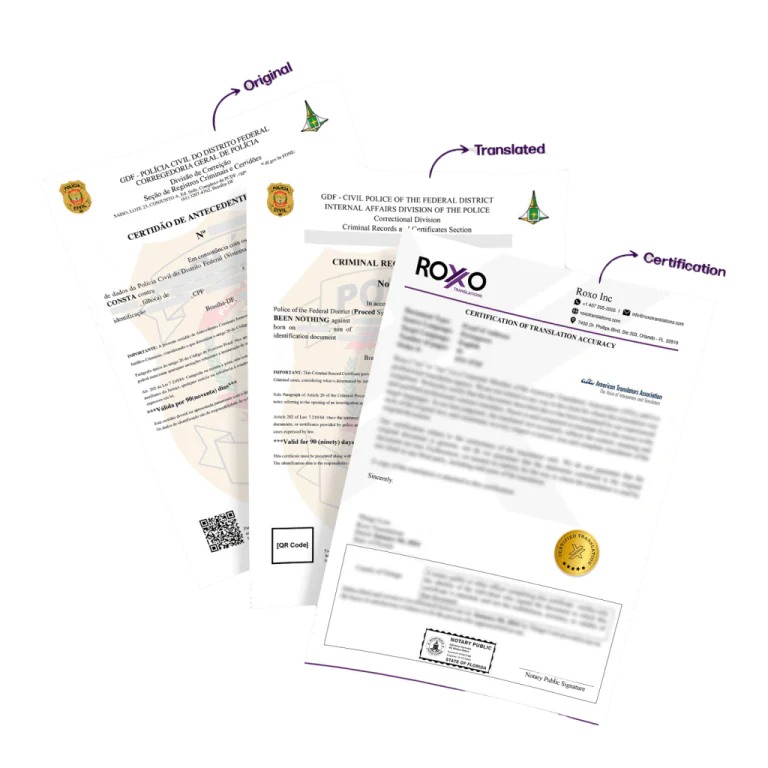
A certified translation is a complete and accurate translation of an official document, accompanied by a signed certification statement from the translator or translation company.
This certification confirms that:
-
The translation is accurate and complete
-
The translator is fluent in both languages
-
The translation meets official legal requirements
For agencies such as USCIS (U.S. Citizenship and Immigration Services), certified translations are mandatory for any document not originally issued in English.
Why Does a Marriage Certificate Require a Certified Translation?
A marriage certificate is a legal document that proves a marital relationship. In immigration and legal procedures, it is commonly required for:
-
Marriage-based Green Card applications
-
Family petitions (Form I-130)
-
Adjustment of status
-
Spouse visas
-
Naturalization processes
-
Legal record updates
Without a certified translation, the document may be considered invalid or incomplete.
Common Mistakes That Delay Applications
Even simple documents can cause serious delays when translated incorrectly. The most frequent issues include:
-
Using automatic or online translators
-
Incomplete translations
-
Missing stamps, seals, or annotations
-
Inconsistent names or dates
-
Missing certification statement
These errors often lead to Requests for Evidence (RFE) or processing delays.
What Must Be Included in a Certified Marriage Certificate Translation?
A proper certified translation must reflect every detail of the original document, including:
-
Full names of both spouses
-
Date and place of marriage
-
Registration or record number
-
Issuing authority
-
Signatures, stamps, and seals
-
Any notes or remarks
No information should be summarized or omitted.
Does a Certified Translation Need to Be Notarized?
For USCIS purposes, notarization is not required. What matters is the translator’s signed certification.
However, some courts or institutions may request notarization. Working with an experienced provider ensures you receive the correct format for your specific case.
Why Working With a Specialized Translation Company Matters
When immigration and legal documentation is involved, accuracy is non-negotiable. Professional translation services provide:
-
Full compliance with legal standards
-
Acceptance by official authorities
-
Reduced risk of rejection
-
Faster processing
-
Confidential handling of sensitive documents
A correctly prepared translation from the start prevents unnecessary delays.
Roxo Translations’ Expertise
At Roxo Translations, we specialize in certified translations for immigration and legal use. Our services are designed to provide:
-
Translations fully accepted by USCIS
-
Fast and professional turnaround
-
Strict quality control
-
Dedicated support throughout the process
We help clients move forward with confidence in their immigration and legal journeys.
A certified marriage certificate translation is not just a formality, it is a critical requirement that directly impacts your application’s success.
Choosing a reliable translation partner ensures your documents are accurate, compliant, and ready for submission.
Need a trusted certified translation?
Roxo Translations is here to support you with accuracy, speed, and professionalism. Contact us today and ensure your documents are handled the right way.
Related topics: certified translation | marriage certificate translation | immigration documents | USCIS translation | legal document translation
Related article:
Certified Translations for USCIS: Everything You Need to Know















 Death Certificates
  Marriage Certificate
  Divorce Documents
  Power of Attorney
  Passport
  Driving License
  Vaccination Record
  ID Card
  Patent Application
  Academic Transcripts
  Criminal Record
  Medical Records
  Birth Certificate
  Legal Contract
  Sworn Affidavits
 Arabic
  Chinese
  French
  German
  Italian
  Japanese
  Korean
  Portuguese
  Russian
  Spanish
  Vietnamese