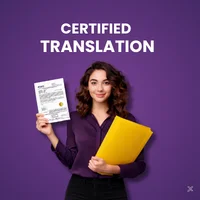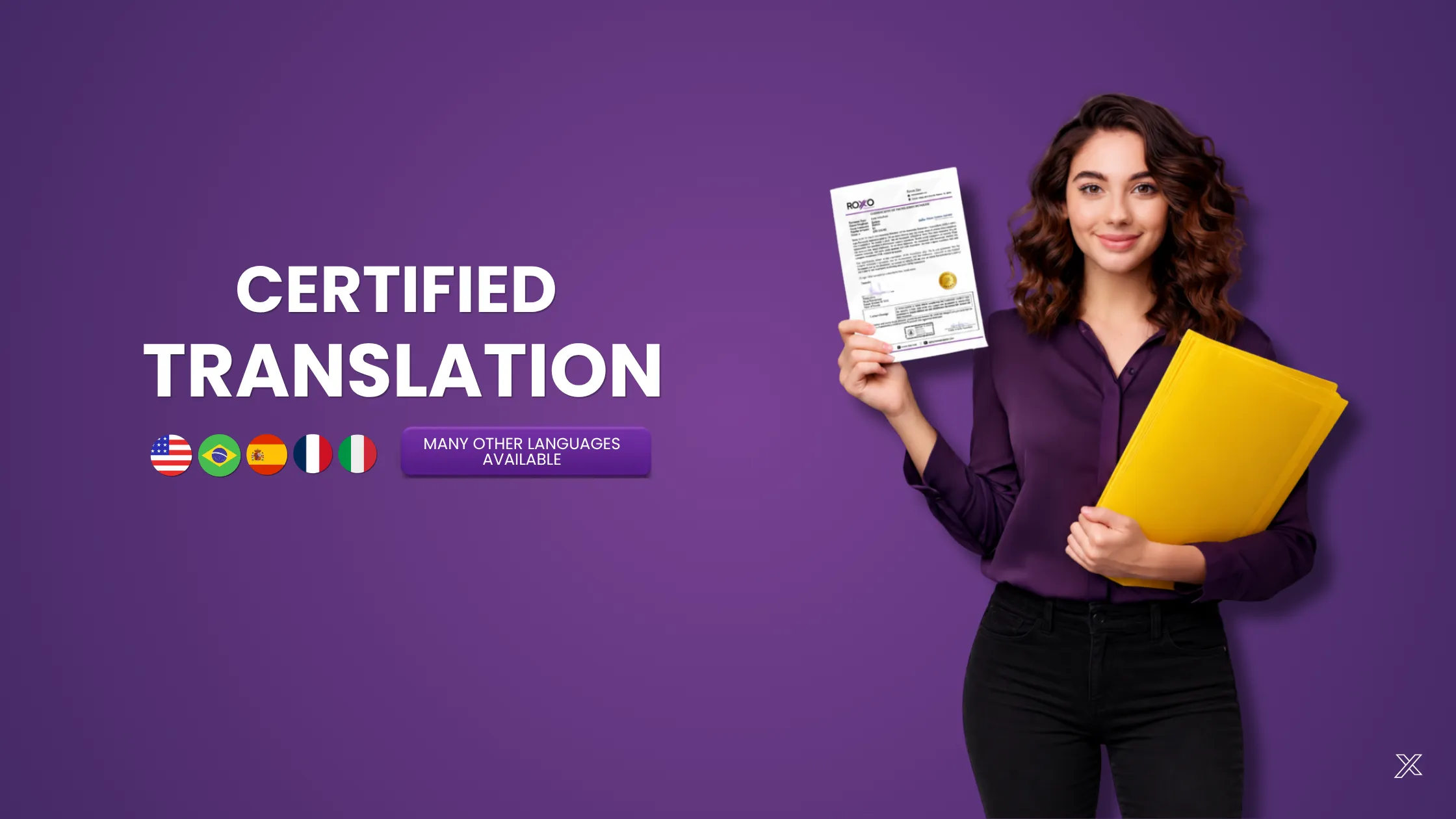
What is certified translation and what it includes: it is the complete translation of a document, signed by a qualified professional, with a statement that it is accurate and complete. In the United States, it is the format USCIS, courts, universities and most official institutions require. "Certified translation" shows up in almost every letter that asks for a document in another language, but few people know exactly what the term covers.
Understanding what is included avoids two common traps: paying for less than you need, or thinking you need something the institution does not ask for.
Key takeaways
- A certified translation is a translation accompanied by the translator's signed statement (Certificate of Accuracy) that the text is accurate and complete.
- It is different from a regular translation, which has no such statement and is usually not accepted by official institutions.
- Notarization is something else: USCIS does not require it, but some schools and courts do; at Roxo it is already included.
- A quality certified translation goes through double review, not just a single pass.
- In the US there is no government license for a "certified translator": what is required is the complete translation with the signed statement.
Contents
- What is certified translation
- The translator's statement: what it is and why it matters
- Certified translation vs. regular translation
- Notarization is something else
- Who can do a certified translation
- Frequently asked questions
What is certified translation
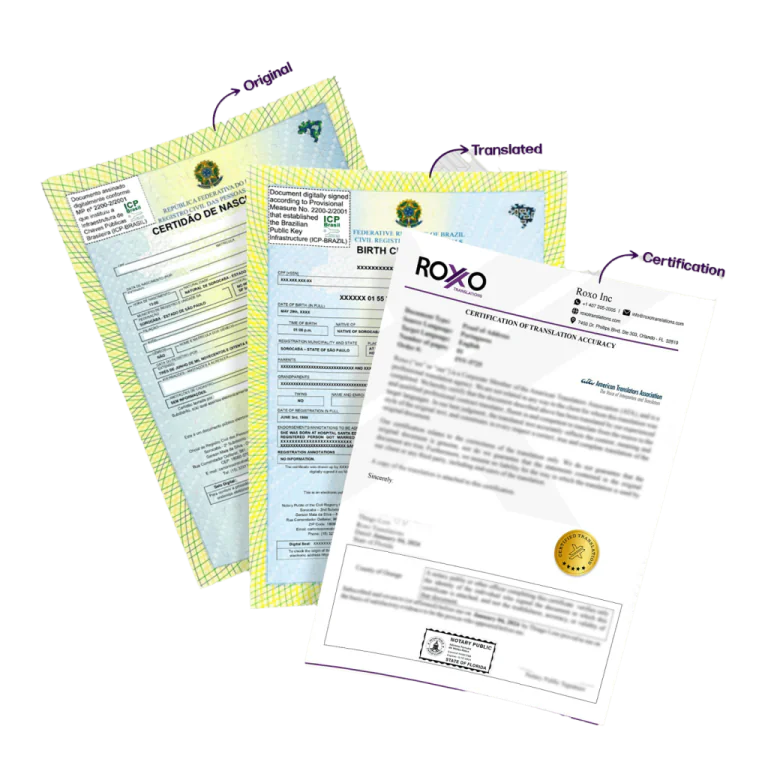
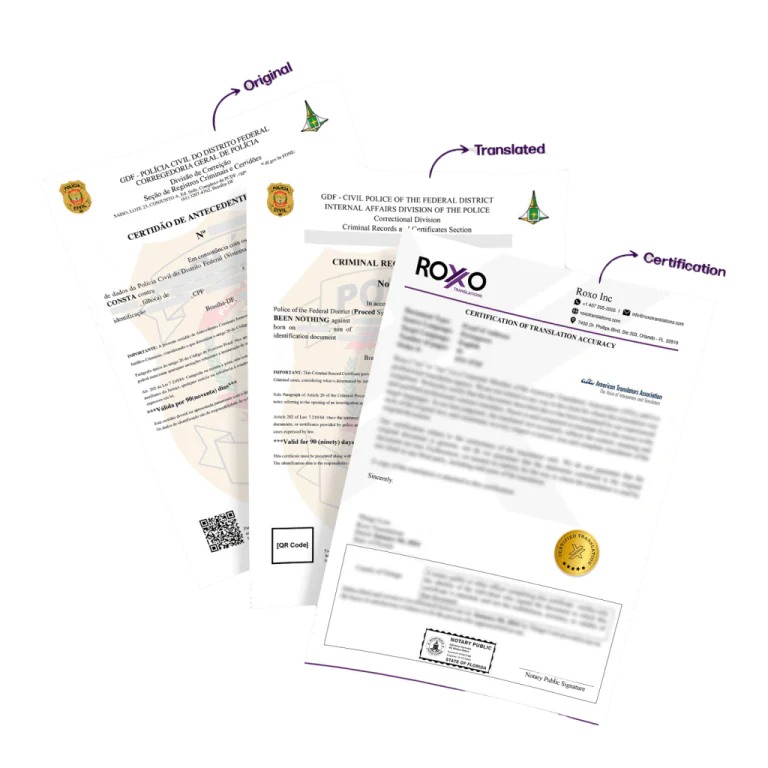
It is the complete and accurate translation of a document, delivered with a formal statement signed by the translator, the Certificate of Accuracy, affirming that the translation faithfully reflects the original and that the translator is competent in both languages. It is that statement, more than the translation itself, that makes the package "certified".
The translator's statement: what it is and why it matters
It is a signed statement that comes with the translation and confirms the translator's competence and the accuracy of the translated text. It is what institutions like USCIS, universities and courts ask for: without it, the translation alone is usually not accepted, no matter how good the text is.
Certified translation vs. regular translation
A regular translation can be technically correct and still be rejected by an official institution, because it lacks the statement that formally confirms its accuracy. The difference is not necessarily in the quality of the translation, but in the statement that makes it acceptable for official purposes.
Notarization is something else
Certification is the translator's signed statement that the translation is accurate and complete. Notarization is a Notary Public confirming the identity of the person who signed that statement, without assessing the translation. USCIS does not require notarization, but some schools, courts and other agencies ask for it, which is why the Roxo certified translation already includes US notarization: the same translation works in more places.
Who can do a certified translation
In the United States, a certified translator is the professional who translates your document and signs a statement that the translation is complete and correct. There is no government license: USCIS asks for the complete translation with that signed statement. That is why it is worth looking for credentials you can check yourself, such as membership in the American Translators Association (ATA).
| Element | Regular translation | Certified translation |
|---|---|---|
| Translator's signed statement | Not included | Always included |
| Accepted by USCIS, universities and courts | Usually not | Yes |
| Notarization | Not applicable | Not required by USCIS; some institutions ask for it |
| Translator credential | Varies | Ideally verifiable (for example, ATA) |
What is included in our service
We standardize what a quality certified translation should always include, leaving nothing essential out of the initial quote.
- Professional human translation with double review
- Signed statement of accuracy and US notarization included
- Layout matching the original, delivered as a non-editable PDF
- ATA member, number 273295, verifiable in the official directory
- Support 7 days a week
Our certified translation page details the full process, and the pricing page shows the price by document type.
Want to order your certified translation?
Now you know exactly what a real certified translation includes, and what should not come as an extra charge. The next step is simple.
Frequently asked questions
What is the difference between certified and sworn translation?
Certified translation is the format USCIS and US agencies accept. Many countries have their own official translator, such as the sworn translator in Brazil or Spain. To use a document in the United States, you need the certified translation; to use it in another country, that country's official format.
Is the translator's statement valid on its own, without the translation?
No. It is always delivered together with the complete translation, as a statement certifying the accuracy of the text. One does not replace the other.
Does every certified translation need notarization?
No. USCIS does not require notarization, but some schools, courts and other agencies ask for it. Our certified translation already includes it.
Is there an official license for a "certified translator" in the US?
There is no government license. USCIS asks for the complete translation with the translator's signed statement; credentials such as ATA membership help confirm competence.
Does a certified translation work for any destination country?
Not necessarily: each country has its own standard. What works in the United States may not be what a consulate or institution in another country requires, so it is worth confirming first.
Related topics: languages we translate | certified translation for immigration/USCIS | certified translation services | help center
Related article: How to know if a translation recommendation is trustworthy














 Legal Contract
  Medical Records
  Vaccination Record
  Diploma
  Patent Application
  Criminal Record
  Power of Attorney
  Passport
  Driving License
  Death Certificates
  ID Card
  Divorce Documents
  Academic Transcripts
  Birth Certificate
  Sworn Affidavits
 Arabic
  Chinese
  French
  German
  Italian
  Japanese
  Korean
  Portuguese
  Russian
  Spanish
  Vietnamese