In immigration practice, delays rarely come from “not having a translation.”
They come from translations that arrive with inconsistencies, names that don’t match across documents, unclear dates, missing certification language, or formatting that makes review painful. The result is predictable: more back-and-forth, more internal edits, and more stress for the client.
For immigration offices and legal assistants, translation is not a side task. It’s part of the case workflow. When translation is standardized, the team gains speed and predictability. When it isn’t, translation becomes a bottleneck.
This guide covers:
What a certified translation means in immigration contexts
The documents most commonly translated
A practical workflow for legal assistants and intake teams
Common mistakes that create rework
Professional recommendations to increase throughput and consistency
Contents
- What “Certified Translation” Means for Immigration
- Common Immigration Documents That Require Translation
- Where Rework Happens Most (and How to Prevent It)
- A Simple Workflow Legal Assistants Can Run Daily
- Common Mistakes to Avoid
- How a Translation Partner Improves Office Performance
- How Roxo Translations Supports Immigration Offices
What “Certified Translation” Means for Immigration
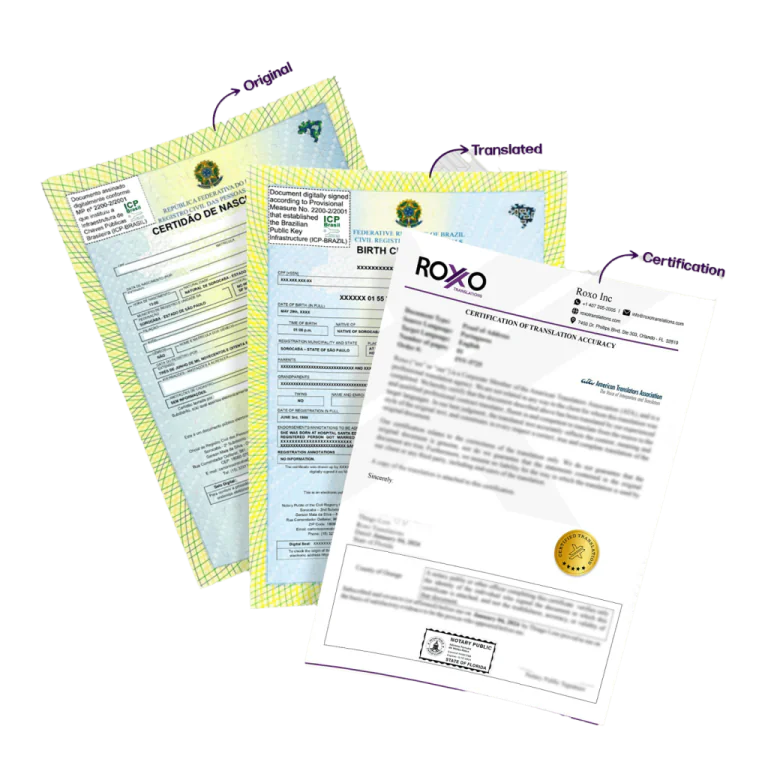
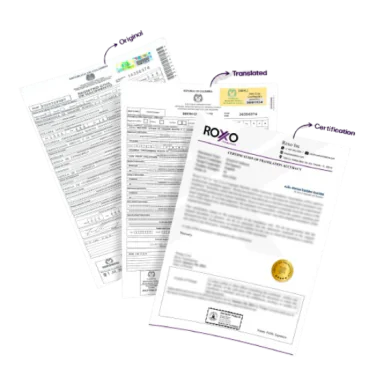
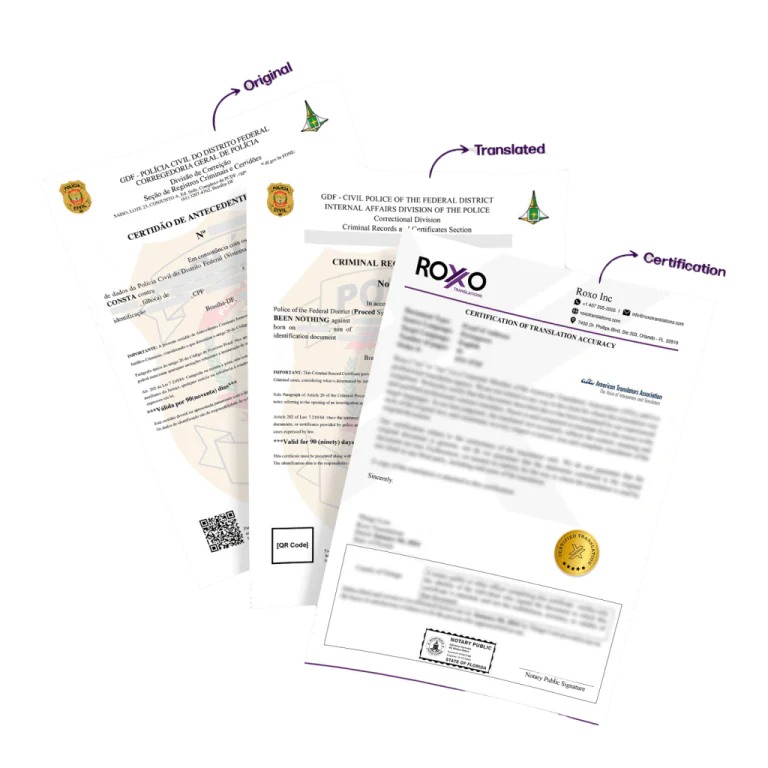
In practical terms, a certified translation includes:
a complete, accurate translation of the original document, and
a certification statement confirming the translator’s competence and the translation’s completeness/accuracy.
For a law office, that usually means:
smoother internal review
fewer formatting questions
clearer packet presentation
less risk of last-minute fixes
While requirements can vary by situation, the operational goal is consistent: deliver translations that are complete, legible, consistent, and properly certified.
Common Immigration Documents That Require Translation
Immigration cases frequently include:
Birth certificates
Marriage certificates / divorce decrees
Police records (when applicable)
IDs, driver’s licenses, civil registry records
Diplomas and academic certificates
Transcripts / school records
Support letters and affidavits
Medical records (when applicable)
When you handle volume, having a reliable translation standard for these document types saves hours every week.
Where Rework Happens Most (and How to Prevent It)
1) Inconsistent names, spellings, and formatting
“José da Silva” becomes “Jose Silva” in one document, “J. da Silva” in another, and the case packet looks messy.
Fix: define a “case standard” for names and keep it consistent across the entire packet.
2) Difficult-to-review layouts
Bad formatting forces your team to decipher structure instead of reviewing content.
Fix: clean formatting that mirrors the source document and is delivered as a final, file-ready PDF.
3) Unpredictable turnaround times
If translations control your schedule, you lose control of deadlines.
Fix: set clear service levels (standard vs. urgent) and use one partner with defined expectations.
4) Too many revision cycles
If your team is rewriting translations, cost and time explode.
Fix: choose a provider experienced in immigration documents and standardize terms and templates.
A Simple Workflow Legal Assistants Can Run Daily
A high-performing workflow usually looks like this:
Receive documents (clear scans/photos)
Quick intake checklist (language, pages, urgency, certification needed, standardized name)
Translation + QA (consistency check for names/dates)
Certification included (statement attached)
Standard delivery (final PDF ready to file)
The key is repeatability. If every request enters the system the same way, every delivery comes out consistent.
Common Mistakes to Avoid
Sending low-quality scans and expecting perfect accuracy
Combining multiple documents without labeling each one
Marking everything “urgent” without clear priorities
Forgetting to confirm whether certification is required
Changing the standard name halfway through production
Using multiple providers without a style guide
How a Translation Partner Improves Office Performance
When the same partner handles your office’s translations, you gain:
lower rework
faster review cycles
predictable delivery
a more professional case packet
a better client experience (less delay, more confidence)
That consistency becomes a competitive advantage, especially in high-volume practices.
How Roxo Translations Supports Immigration Offices
Roxo Translations provides certified immigration translations designed for law offices and legal assistants: consistent formatting, clear structure, and fast turnaround, ready to file.
If you want to reduce internal edits and keep cases moving smoothly, a reliable translation workflow can change your daily operations.
Related topics: USCIS certified translation | immigration document translation | certified translator near me | birth certificate translation services | Spanish to English certified translation
Artículo relacionado: Traducción Certificada aceptada por USCIS: Guía completa













 Birth Certificate
  Marriage Certificate
  Divorce Documents
  Academic Transcripts
  Medical Records
  Diploma
  Legal Contract
  Rental Contract
  Patent Application
  Statement
  Death Certificates
  Financial Statement
  Sworn Affidavits
  Driving License
  Vaccination Record
 Arabic
  Chinese
  French
  German
  Italian
  Japanese
  Korean
  Portuguese
  Russian
  Spanish
  Vietnamese