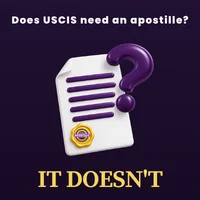
No. USCIS does not ask for a translator from your city or state. It asks that every foreign-language document come with a complete English translation and a signed statement from the translator that they are competent to translate and that the translation is accurate (8 CFR 103.2(b)(3)). That rule is federal, so it is the same in Florida, New York or California, and an online certified translation meets it wherever you live.
What decides whether a translation is accepted is what it includes, not where the translator sits.
Key takeaways
- USCIS asks for a complete translation and a signed statement, not a local translator.
- The rule is federal (8 CFR 103.2(b)(3)): the same in every state.
- A notarization done in Florida is recognized across the US.
- What to check: the certificate of accuracy, the translator’s credential and the revision policy.
- Your USCIS office depends on your ZIP code, not on where the translation was made.
Table of contents
- What USCIS actually asks for
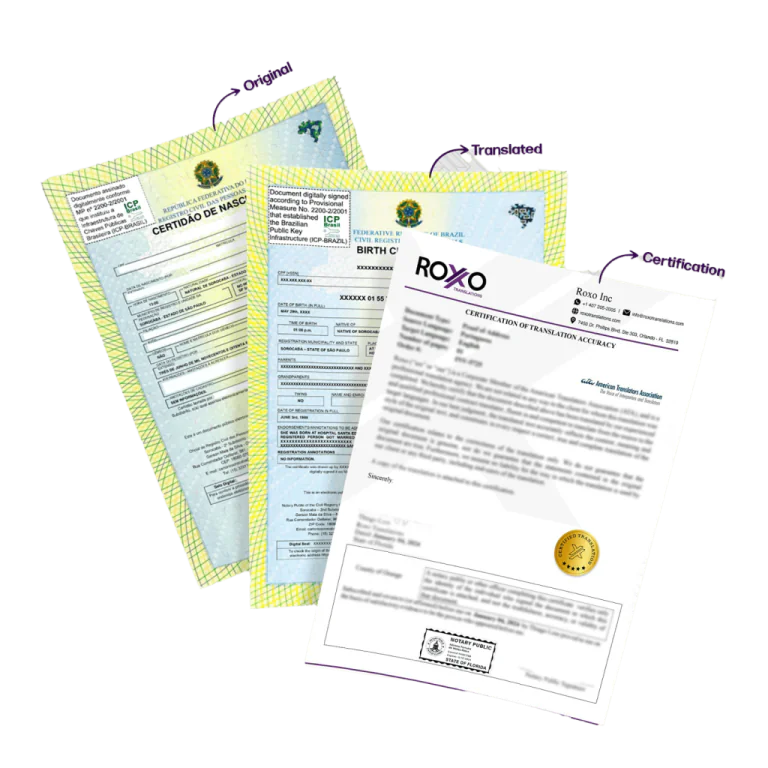
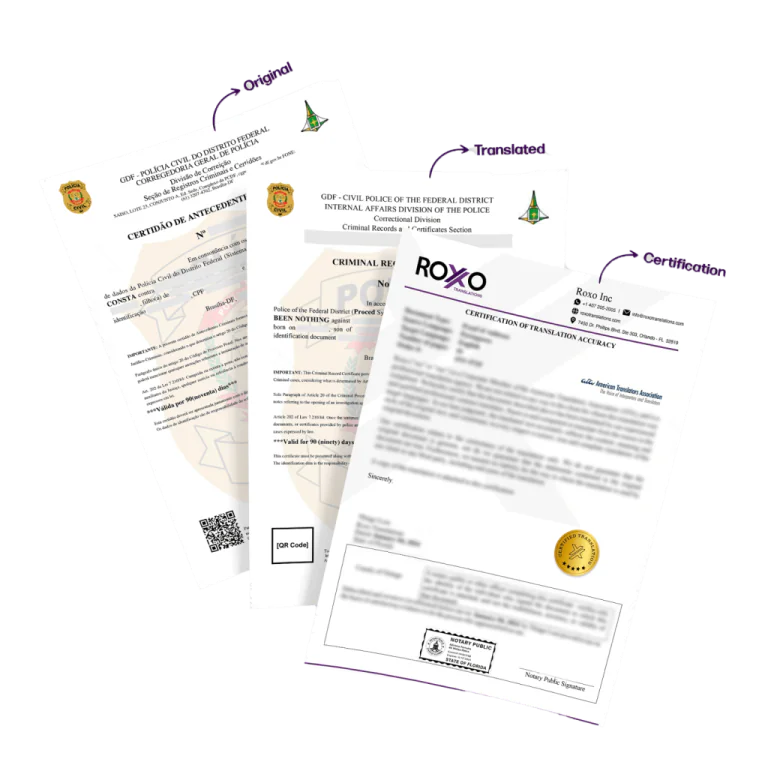
- What the certificate of accuracy includes
- When the place matters
- How to choose a certified translator
- FAQ
What USCIS actually asks for
For any document in a foreign language, USCIS asks for the full English translation and the translator’s certification of competence and accuracy. It does not ask where the translator lives, and it does not require notarization, although some schools, courts and other agencies do. That is why our certified translation already includes US notarization.
What the certificate of accuracy includes
- The name and signature of the translator
- A statement that the translator is fluent in both languages
- A statement that the translation is complete and accurate
- The date and the identification of the translated document
- The notary public seal
When the place matters
The place matters for the office, not for the translator: your USCIS office depends on your ZIP code. In Florida, the main office is the Orlando Field Office. A notarization done in Florida is recognized across the US; if a specific institution asks for a notary from its own state, tell us before ordering so we can check the options.
| Question | Answer |
|---|---|
| Does USCIS require a translator from my state? | No, the rule is federal |
| Does USCIS require notarization? | No, but it is included |
| Is a Florida notarization valid in other states? | Yes, it is recognized across the US |
| What decides my USCIS office? | Your ZIP code |
How to choose a certified translator
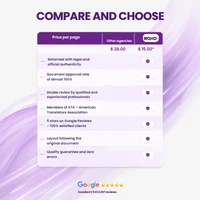
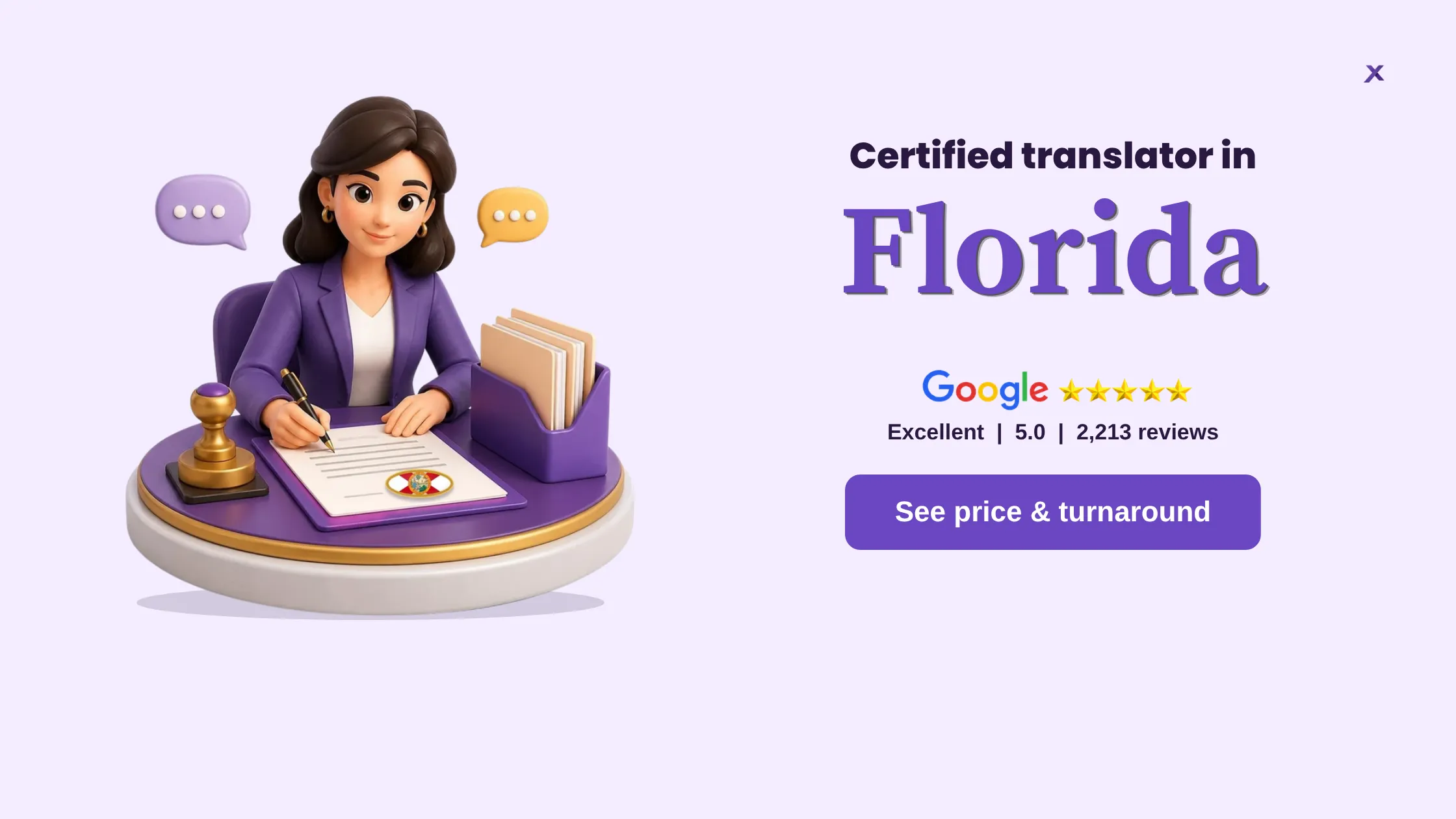
Check that the translation is complete, including stamps and seals, that the certificate of accuracy is signed, and that the translator’s credential can be verified. Roxo Translations is an ATA member, number 273295, has its US office in Windermere, near Orlando, and offers free revisions within 60 days of delivery. Our certified translator in Florida page shows what the translator signs.
FAQ
Do I need a certified translator from my state for USCIS?
No. USCIS asks for a complete English translation and the translator’s signed statement, a federal rule that is the same in every state.
Is an online certified translation accepted by USCIS?
Yes, when it includes the complete translation and the signed certificate of accuracy.
Is a Florida notarization accepted in other states?
Yes. A notarization performed in Florida is recognized across the United States.
Which USCIS office handles my case?
It depends on your ZIP code. In Florida, the main office is the Orlando Field Office.
Need a certified translation for USCIS?
Upload your document, see the price and the deadline instantly, and receive the translation as a PDF with the certificate of accuracy and notarization.
Related topics: certified translator in Florida | certified translation in Florida | certified translation for USCIS | help center
Related article: How to compare certified translation agencies before hiring














 Employee Handbook
 Resume
 Passport
 Divorce Documents
 Emails
 Birth Certificate
 WhatsApp Messages
 Legal Contract
 Press Release
 Criminal Record
 ID Card
 Patent Application
 User Manual
 Vaccination Record
 Academic Transcripts

 Arabic
 Chinese (Simplified)
 French
 German
 Italian
 Japanese
 Korean
 Portuguese (Brazil)
 Russian
 Spanish
 Vietnamese