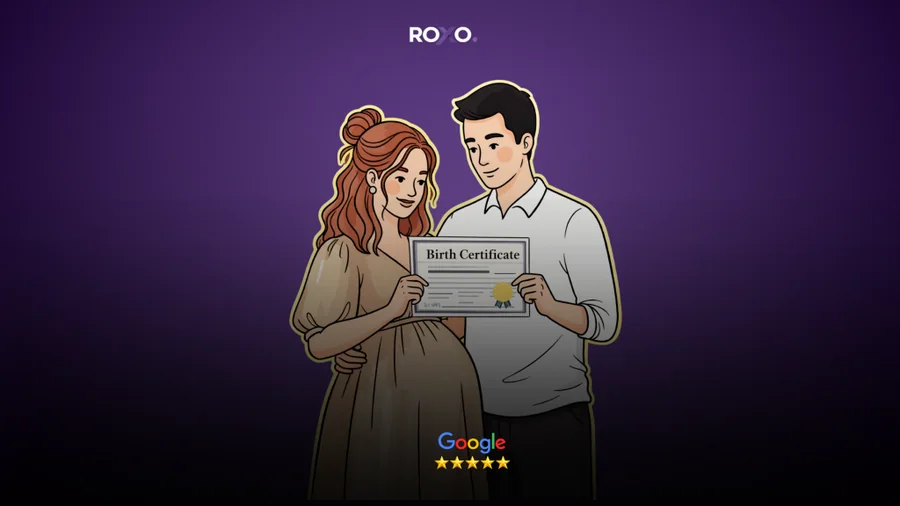
If you’re filing an immigration petition, adjusting status, applying for naturalization, or submitting documents to a school or court in the United States, your birth certificate is one of the most important documents in your file.
And here’s the reality most people discover too late: a birth certificate translation isn’t “just a translation.” For USCIS and other official institutions, it must be complete, accurate, and properly certified. Small mistakes misspelled names, inconsistent dates, missing stamps can trigger requests for evidence, added expenses, and stressful delays.
This guide will help you understand when you need a certified translation, what it must include, common errors to avoid, and how to make sure your birth certificate translation is accepted on the first try.
Contents
- When do you need a certified birth certificate translation?
- O que torna uma tradução jurídica certificada?
- What USCIS and official reviewers look for
- The biggest mistakes that cause delays
- How to prepare your birth certificate for translation
- Roxo Translations: Certified translation accepted by USCIS
- Quick checklist before you submit
When do you need a certified birth certificate translation?
You typically need a certified translation when your birth certificate is not in English and it’s being used for:
-
USCIS immigration filings (family-based petitions, adjustment of status, naturalization, etc.)
-
Consular processing and visa applications
-
Schools and universities
-
Courts and legal matters
-
Employment and HR verification
-
Health insurance and benefits
-
Name change or identity verification processes
Because the birth certificate verifies identity and family relationship, it’s often reviewed closely, especially in immigration matters.
O que torna uma tradução jurídica certificada?
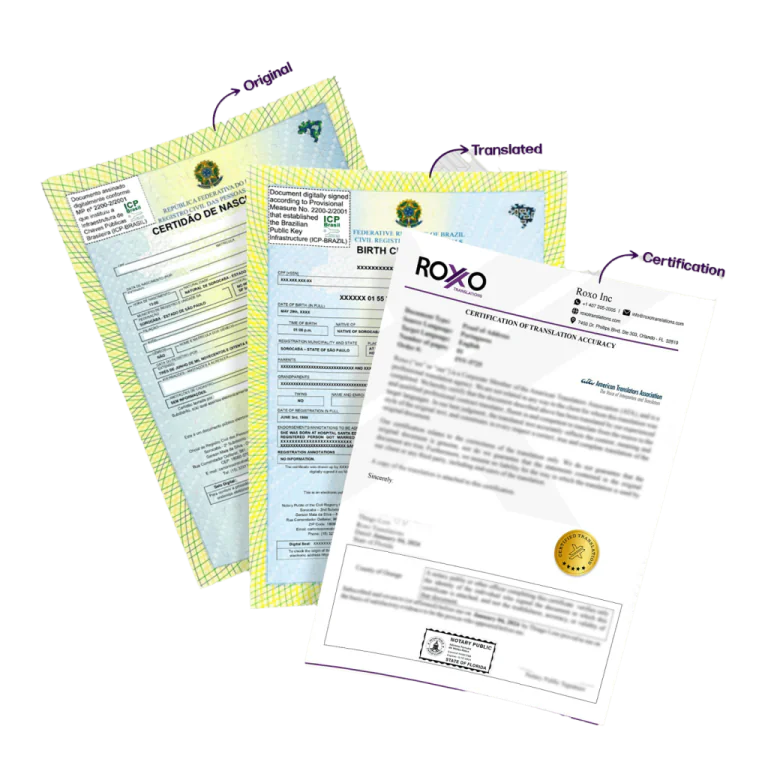
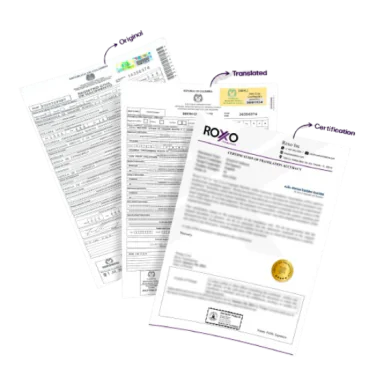
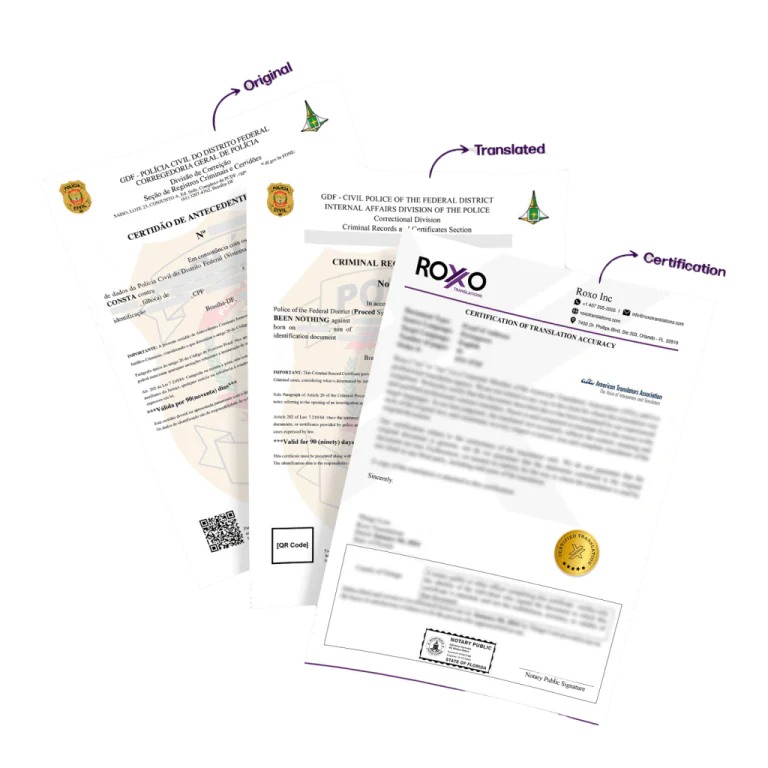
A certified translation includes:
A full translation of the document (not partial)
A signed certification statement confirming the translation is accurate and complete, and that the translator is competent in both languages
This certification is critical for official acceptance, especially for USCIS.
Certified vs. notarized vs. sworn translations
These terms are often confused:
Certified translation (US standard): A complete translation + translator’s certification statement.
Notarized translation: A notary verifies the identity of the signer (not the translation quality). Not always required.
Sworn translation: Common in some countries; performed by a government-authorized sworn translator. Not typically required by USCIS.
For most USCIS-related uses, certified translation is the key requirement.
What USCIS and official reviewers look for
-
A strong birth certificate translation should reflect every relevant element found on the original document, including:
-
Full name of the person registered
-
Date of birth (clearly formatted)
-
Place of birth (city/state/country as shown)
-
Parents’ names
-
Registration details (record number, book/page, registry office information, depending on country)
-
Notes/remarks/amendments
-
Stamps, seals, signatures (represented clearly)
Even when a stamp is hard to read, the translation should indicate what is present (e.g., “stamp present / illegible”).
-
The biggest mistakes that cause delays
Here are the most common issues we see:
1) Name mismatches across documents
Even small differences matter:
-
Missing middle name
-
Different spelling
-
Inconsistent use of accents/diacritics
-
Order changes (common in Latin-based naming conventions)
Practical fix: Align names with the spelling used in passports and USCIS forms.
2) Ambiguous date formatting
Many countries write dates differently (DD/MM/YYYY vs. MM/DD/YYYY). If this isn’t handled correctly, it can create confusion.
Practical fix: Spell out the month in English when needed (e.g., “04 March 2020”) to remove ambiguity.
3) Missing registry information
Some birth certificates include registration references that reviewers may expect to see translated.
Practical fix: Translate every field and label. Don’t omit sections because they “look unimportant.”
4) Ignoring stamps, seals, and annotations
Stamps and notes often contain relevant legal information (corrections, validations, official references).
Practical fix: Include them in the translation and describe them clearly.
5) Using machine translation
Automatic tools can misinterpret official terms and formatting, and they don’t include a proper certification statement.
Practical fix: Use professional certified translation service, especially for USCIS.
How to prepare your birth certificate for translation
To avoid back-and-forth and speed up delivery:
Send a clear scan or high-quality photo (no glare, no blur)
Capture all edges, no cropping
Include front/back if there’s text on both sides
Confirm the purpose: USCIS, school, court, or other
If you have a deadline, mention it upfront
Roxo Translations: Certified translation accepted by USCIS
Roxo Translations provides certified birth certificate translations with:
-
Accurate names and dates
-
Complete translation (including stamps and annotations)
-
Clear formatting for easy review
-
Certification included
-
Fast turnaround options
If your case involves multiple documents, consistency across translations is also essential, and we help ensure that.
Quick checklist before you submit
Document is fully legible
Names match your USCIS forms/passport
Dates are unambiguous
All stamps/notes are included
Certification statement is included
If you want, send your birth certificate file and we can confirm the best format for your situation.
Related topics: USCIS certified translation |birth certificate translation services | certified translator near me | translate birth certificate to English| certified document translation near me
Related article:Certified Translations for USCIS: Everything You Need to Know














 Birth Certificate
  Marriage Certificate
  Divorce Documents
  Academic Transcripts
  Medical Records
  Diploma
  Legal Contract
  Rental Contract
  Patent Application
  Statement
  Death Certificates
  Financial Statement
  Sworn Affidavits
  Driving License
  Vaccination Record
 Arabic
  Chinese
  French
  German
  Italian
  Japanese
  Korean
  Portuguese
  Russian
  Spanish
  Vietnamese