When you need a document translated for immigration, USCIS, school admission, legal purposes, or official applications, the goal isn’t just “getting it translated.” The goal is getting it accepted, without delays, rejections, or expensive do-overs.
That’s why certified document translation matters. Many people search phrases like: “certified translator near me” “where can I translate my documents near me” “birth certificate translation services” “where can I translate my birth certificate to English” “Spanish translation to English” These searches show high intent: people are trying to solve a real, urgent problem, and they need the translation done correctly the first time.
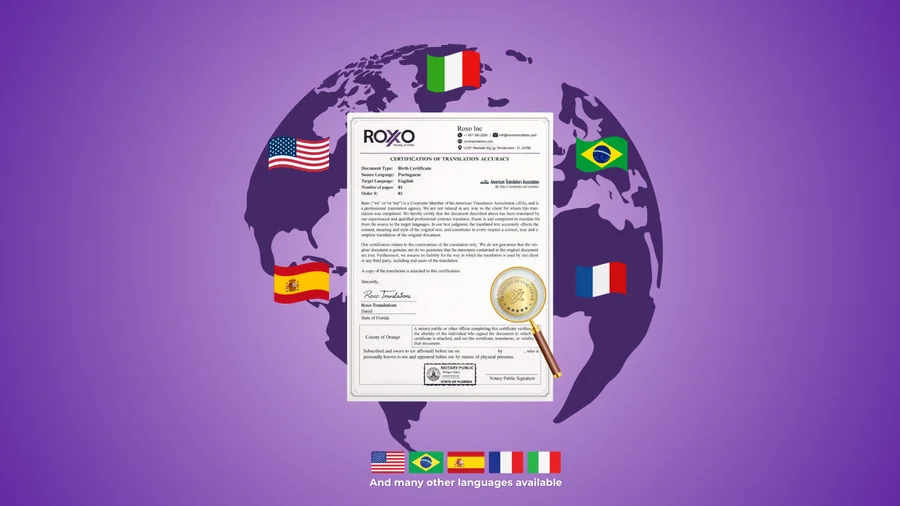
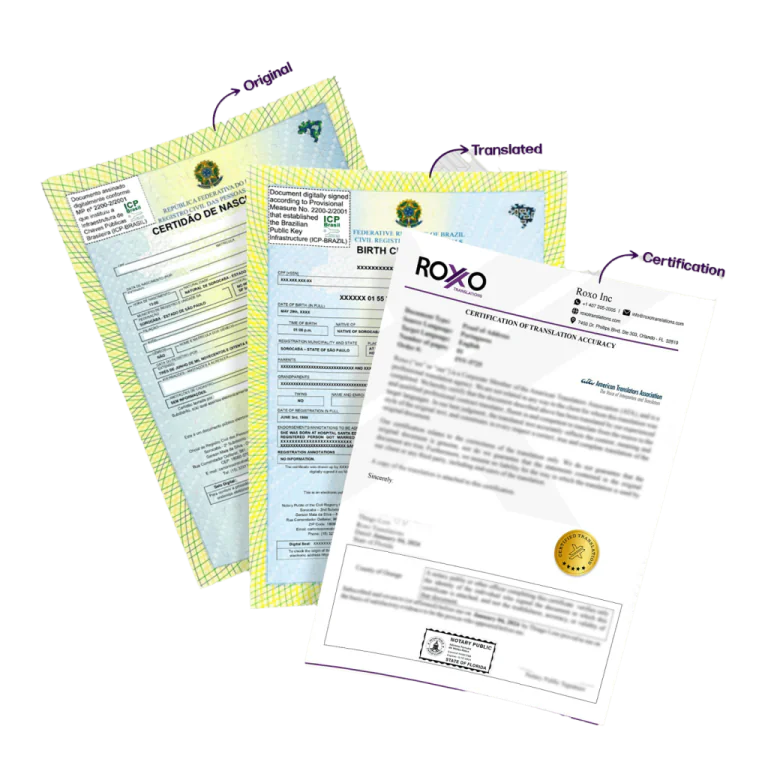
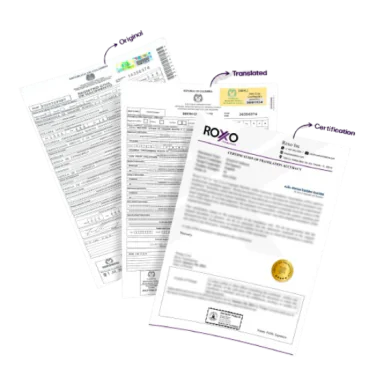
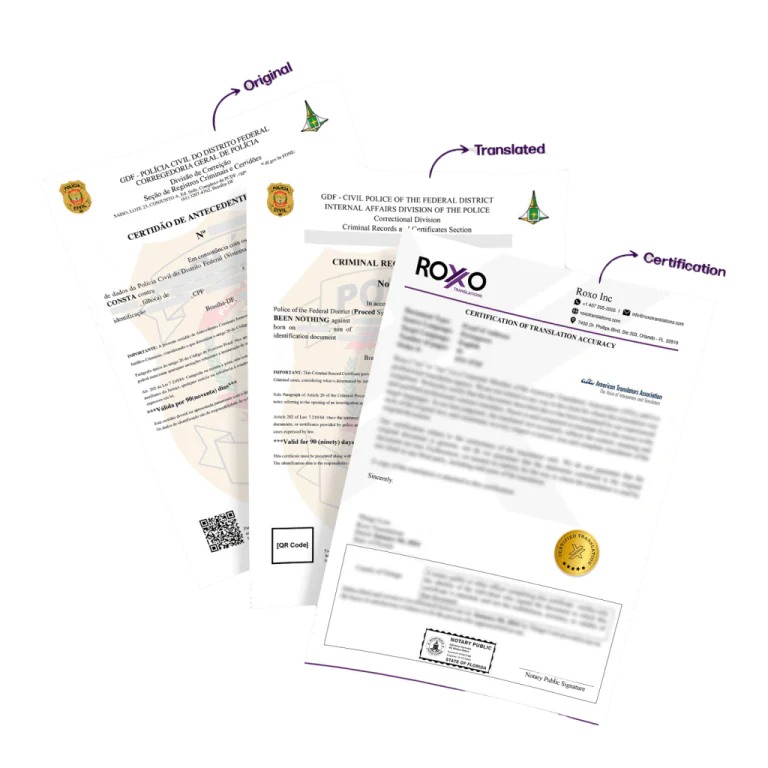
This guide explains: what “certified translation” usually means, when you need it, what causes rejections, how to prepare your documents, and how to choose a translation provider you can trust. What is certified document translation? A certified translation typically includes: A complete and accurate translation of the document A certification statement confirming accuracy and completeness Translator/provider details (depending on requirements) Certified translation is commonly requested for: immigration filings (often USCIS-related), birth, marriage, and divorce certificates, academic transcripts and diplomas, legal documents, employment verification documents. Important note: Requirements vary by institution. Some ask for “certified,” others ask for “notarized,” and some only need professional translation. A reliable provider will help you choose the right option for your case. Why “multiple languages” translation needs an extra standard Translating into multiple languages isn’t just repeating the same task in different language pairs. The complexity increases because you must maintain: 1) Consistency across languages Names, addresses, dates, and document numbers must remain consistent across all translated versions. 2) Terminology control Official terms should match common institutional language (education, legal, civil registry, immigration terminology). 3) Formatting integrity Many agencies review documents quickly. Clean formatting makes the document easier to verify and reduces questions. 4) Quality assurance Professional workflows include review steps to catch issues like spelling variations, date format confusion, and missing stamps/notes.
Common reasons documents get rejected or delayed If your marketing goal is higher conversion and lower cost, this is also the customer’s goal: avoid rework.
Here are the top issues that cause problems: Mistake #1: Name inconsistencies Example: adding/removing accents, switching surname order, missing middle names, or changing spelling between documents.
How to avoid it: Use your passport/ID as the single source of truth. Mistake #2: Date format errors Different countries use different formats (MM/DD/YYYY vs DD/MM/YYYY). A “small” error can change the meaning.
How to avoid it: Confirm the original format and translate clearly, keeping the correct date. Mistake #3: Missing seals, stamps, notes, or marginal text Agencies often expect everything visible on the original to be represented in the translation.
How to avoid it: Make sure the translation includes stamps and annotations (as applicable). Mistake #4: Partial translation (not complete) Some people translate only “the main text.” That can be a problem for official review.
How to avoid it: Request a complete translation of all visible text. Mistake #5: Over-literal translation Word-for-word translation can sound unnatural or incorrect in legal/official contexts.
How to avoid it: Use professional translators with document experience and proper terminology. How to prepare your documents for faster turnaround If your documents are urgent, your preparation can speed things up significantly. Step 1: Collect everything you need for the same application If you’re submitting multiple documents, send them together. It helps maintain consistency across names, dates, and formatting. Step 2: Specify source and target languages clearly Example: Spanish → English, Portuguese → English, French → English, etc. Step 3: Tell the provider the destination institution USCIS, a university, a court, an employer, a consulate, each may have different expectations. Step 4: Confirm your official name spelling If your documents show different variations, you can highlight the preferred spelling (based on ID). Step 5: Provide a deadline (and your timezone) This avoids misunderstandings and supports accurate delivery planning. The most commonly translated documents Here are frequent requests for certified document translation services: Birth certificates Marriage and divorce certificates Academic transcripts and diplomas Driver’s licenses (depending on purpose) Employment letters and pay stubs (case-dependent) Court and legal documents Corporate documents and certificates When people search “birth certificate translation services,” it often connects to immigration or school processes, meaning accuracy and formatting matter. “Near me” vs online: what should you choose? Many users search “document translation near me,” but online certified translation can be faster and just as reliable if the provider follows professional standards. Choose local if: you need physical drop-off/pick-up, you need in-person support, your institution requires specific local handling. Choose online if: you want speed and convenience, you need translations into multiple languages, you want a streamlined upload/review/delivery process. A quick checklist before you order Use this checklist to prevent delays: Is the translation certified if your institution requires it? Are names spelled consistently across all documents? Are stamps/seals/notes represented (as needed)? Is the date format correct? Is the formatting clean and easy to review? Did you tell the provider the purpose (USCIS, school, legal, etc.)? Final professional recommendation If the document will be reviewed by an official institution, the best cost-saving strategy is doing it correctly the first time: certified translation, professional formatting, and quality review.
At Roxo, we focus on certified document translation services with professional standards, built for immigration, USCIS, academic, and official use across multiple languages.
Related topics: certified translator near me | birth certificate translation services | document translation near me | Spanish translation to English | online document translator
Related article: Certified Translations for USCIS: Everything You Need to Know













 Birth Certificate
  Marriage Certificate
  Divorce Documents
  Academic Transcripts
  Medical Records
  Diploma
  Legal Contract
  Rental Contract
  Patent Application
  Statement
  Death Certificates
  Financial Statement
  Sworn Affidavits
  Driving License
  Vaccination Record
 Arabic
  Chinese
  French
  German
  Italian
  Japanese
  Korean
  Portuguese
  Russian
  Spanish
  Vietnamese