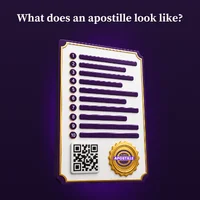
For a US certificate, the certified copy gets the apostille, not the notarized copy. States apostille the certified copy issued by the vital records office itself, and a notarized photocopy is the most common reason for refusal. Request the certified copy from the vital records office of the issuing state, then have it apostilled by that same state’s Secretary of State.
The mix-up is understandable: both copies carry a seal and a signature. But only one of them comes from the agency that issued the document, and that is what the apostille needs.

Key takeaways
- A certified copy is issued by the agency itself (vital records); a notarized copy is a photocopy signed by a notary.
- States apostille the certified copy; the notarized copy is the most common reason for refusal.
- The apostille on a US certificate comes from the Secretary of State of the same state that issued it.
- A private document, such as a power of attorney, is apostilled after being notarized. A simple photocopy is not.
- One apostille covers one document. Ask the receiving authority whether it wants the original or a copy.
Table of contents
- Notarized copy vs. certified copy
- Why the notarized copy is refused
- How to get a certified copy
- When you do notarize before the apostille
- FAQ
Notarized copy vs. certified copy
| Notarized copy | Certified copy | |
|---|---|---|
| Who issues it | A notary, on a photocopy | The state vital records office |
| Whose signature it carries | The notary’s | The issuing agency’s |
| Gets an apostille for a US certificate? | Usually not | Yes, from the Secretary of State of the same state |
Why the notarized copy is refused
An apostille authenticates the signature of whoever signed the document, not its content. On a certified copy, the signer is the agency that keeps the record. On a notarized copy, the signature is the notary’s, certifying a photocopy, and the state apostilles the certificate issued by vital records, not the photocopy. That is why the notarized copy comes back.
How to get a certified copy
Request a certified copy from the vital records office of the state where you were born, then have it apostilled by that state’s Secretary of State. Roxo Apostille can handle the filing and logistics. If the document will be used abroad, we confirm with you whether the translation comes before or after the apostille.
When you do notarize before the apostille
Public documents (birth, marriage and death certificates, diplomas, court decisions, police records) are apostilled in the version issued by the agency. A private document, such as a power of attorney, has no issuing agency: that is why it is notarized first and apostilled after. A simple photocopy is not apostilled.
FAQ
Can a notarized copy of my US certificate be apostilled?
Usually not. US states apostille the certified copy issued by the vital records office itself. Request a certified copy from the issuing state first.
Where do I request the certified copy?
From the vital records office of the state that issued the certificate. Then it is apostilled by that same state’s Secretary of State.
Do I need the original to get an apostille?
One apostille covers one document. Ask the receiving authority whether it wants the original or a copy.
Which documents can be apostilled?
Public documents, such as certificates, diplomas, court decisions and police records. A private document, such as a power of attorney, is apostilled after being notarized. A simple photocopy is not.
Not sure which copy to apostille?
Tell us where the document was issued and where it is going. We check the copy before charging and tell you whether it works or whether you need a certified copy.
Related topics: apostille services | certified translation | birth certificate translation | help center
Related article: Why is an apostille rejected?
















 Medical Records
 Patent Application
 WhatsApp Messages
 Legal Contract
 Financial Statement
 Court Documents
 Birth Certificate
 Divorce Documents
 Resume
 Driving License
 Emails
 Death Certificates
 Sworn Affidavits
 Power of Attorney
 Passport

 Arabic
 Chinese (Simplified)
 French
 German
 Italian
 Japanese
 Korean
 Portuguese (Brazil)
 Russian
 Spanish
 Vietnamese