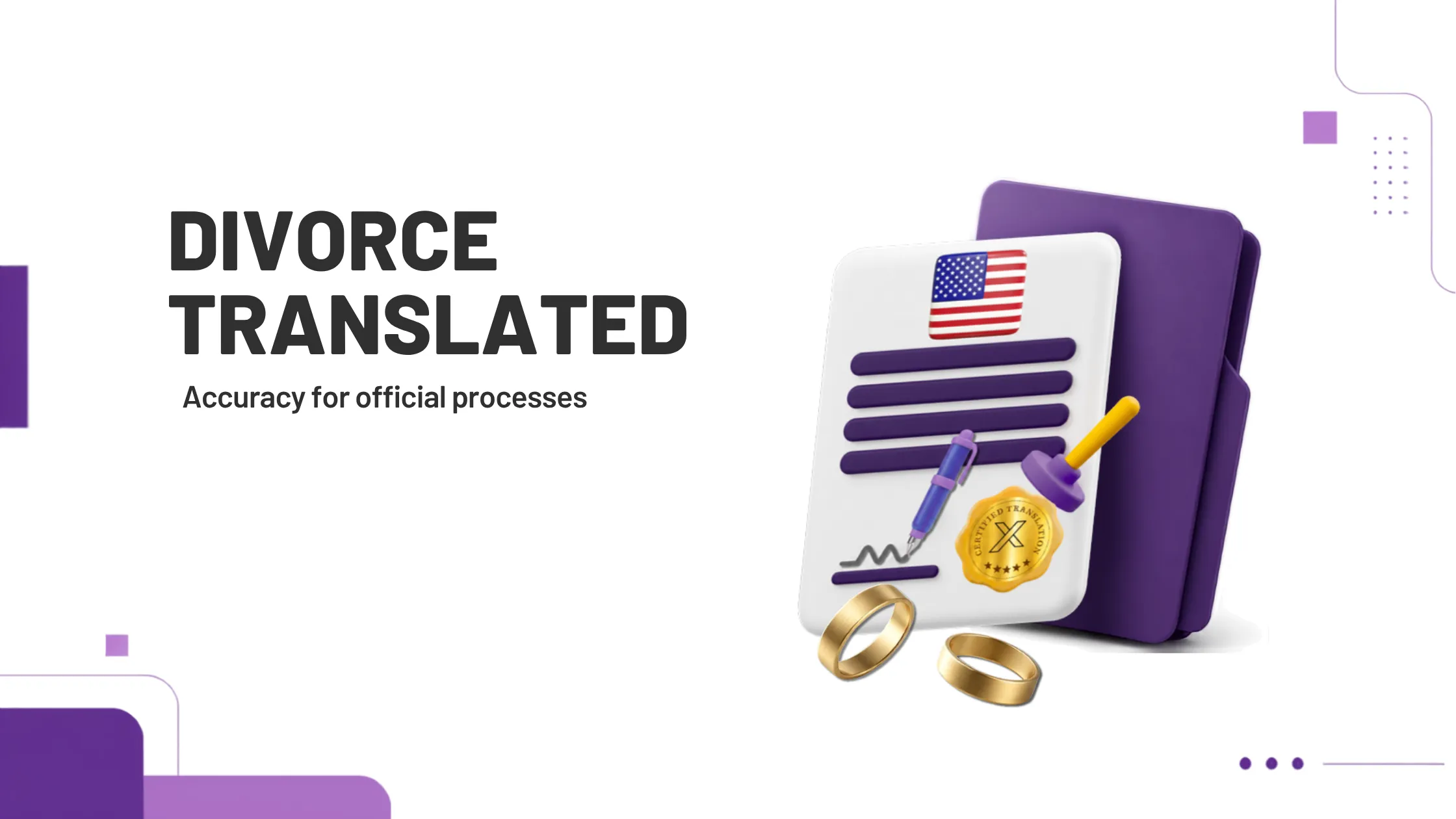
A divorce decree issued in another country needs a certified English translation to be used in the US: to remarry, in a marriage-based green card case or to change a last name on official documents. Without it, the receiving institution cannot read the document, and the process stops there.
It is not a complicated process, but it has specific details, and getting them wrong usually costs extra weeks of waiting.
Key takeaways
- A foreign divorce decree needs a certified translation, with a certificate of accuracy, to be accepted by US institutions.
- It is mainly required to remarry, for a marriage-based green card and for name changes on official documents.
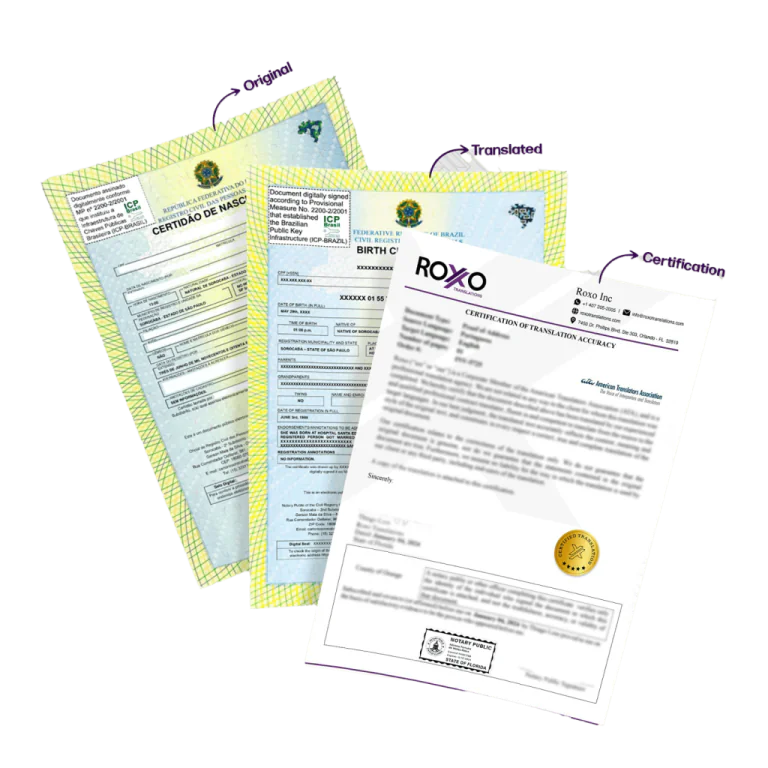
- The complete document is translated, including court seals, signatures and annotations, not just the ruling.
- Some institutions also ask for an apostille, which is a separate step from the translation.
- A 24-hour turnaround is usually enough even for multi-page decrees.
Table of contents
- When a divorce decree translation is required
- What part of the document to translate
- Certified translation vs. apostille
- Who can do this translation
- How long it takes
- FAQ
When a divorce decree translation is required
A translated divorce decree is usually requested in three situations: to remarry in the US, when the marriage license office needs to confirm the previous marriage ended; in a marriage-based green card case, when USCIS asks for proof that prior marriages were dissolved; and to update a last name on documents such as a driver’s license after a divorce.
| Situation | Why the translation is required |
|---|---|
| Remarrying in the US | The marriage license office needs to confirm the previous marriage ended |
| Marriage-based green card | USCIS asks for proof that prior marriages were dissolved |
| Name change | Updating a driver’s license or other documents with a prior last name |
What part of the document to translate
Translating only the final section where the divorce is granted is not enough. The complete document, including the court letterhead, case number, dates, signatures, seals and annotations, has to appear in the translation. We also translate custody and property agreements when they are part of the decree. A partial translation is one of the most common reasons a document gets returned.
Certified translation vs. apostille
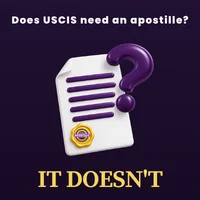
A certified translation confirms that the English text is faithful to the original. An apostille is issued by an authority in the country that issued the document and authenticates the signature and office of whoever signed it, not the content. USCIS asks for the certified translation, not an apostille; other institutions may ask for both. It is worth confirming with the receiving institution before you order.
Who can do this translation
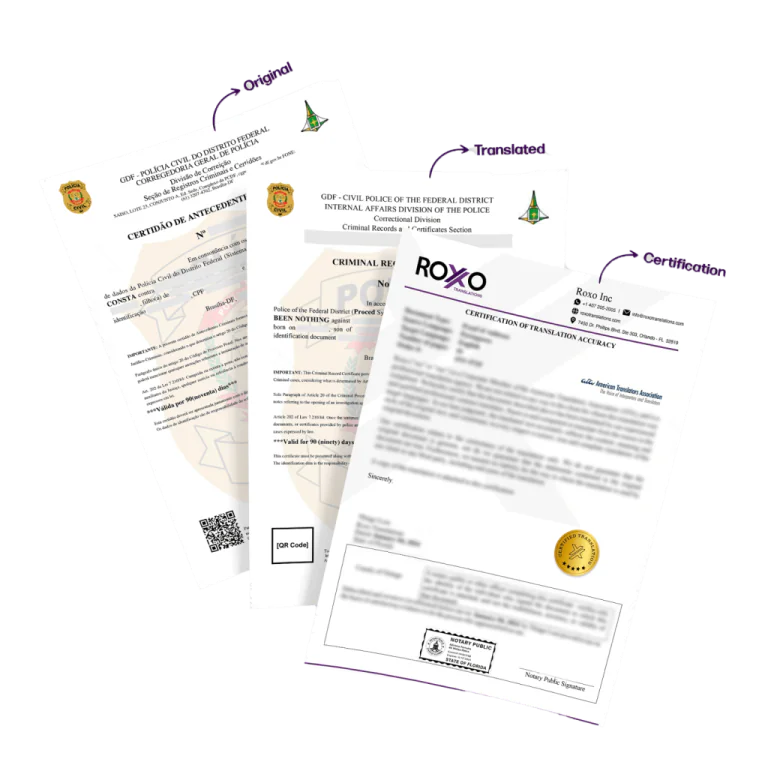
What US institutions look for is a complete translation with the translator’s signed statement that it is accurate and that they are competent in both languages: the certificate of accuracy. A translation done by a bilingual family member, however accurate, is usually not accepted for official purposes.
How long it takes
Most divorce decrees, even multi-page ones, are translated within 24 hours, with the double quality review included. Longer documents, with detailed custody or property agreements, may take more time, and it is worth confirming the turnaround before you order.
How we make divorce document translation easier
Divorce documents have their own format, with court letterhead, seals and signatures, and we treat every element with the same care as the main text.
- Certificate of accuracy and US notarization included, with no separate charge
- Court seals, letterheads and signatures described precisely
- Delivery in 24 hours, with double human review
- ATA member, number 273295, verifiable in the official directory
- Support 7 days a week to confirm requirements before you send
Our certified translation for immigration page details what USCIS asks for, and our help center answers other questions before you send.
Ready to translate your divorce decree?
Now you know when the translation is required and what has to be included. The next step is simple: send the document and leave the rest to us.
FAQ
Do I need to translate my divorce decree to remarry in the US?
In most cases, yes: the marriage license office needs to confirm, in English, that your previous marriage ended.
Do I need to translate the whole divorce document or just the ruling?
The whole document, including the court letterhead, case number, dates, signatures and annotations. A partial translation is a common reason for a document to be returned.
Do you translate custody and property agreements?
Yes. We translate divorce certificates, decrees and annotations, plus custody and property agreements.
Does a certified translation replace an apostille?
No. The apostille authenticates the original document; the certified translation confirms the English text is faithful. Some institutions ask for both.
Can a bilingual family member do this translation?
It is usually not accepted for official purposes: institutions ask for a certified translation with a certificate of accuracy.
Related topics: certified translation for immigration/USCIS | certified translation | pricing | apostille services
Related article: Which certificates need certified translation?
















 Certificates
 Emails
 Medical Records
 WhatsApp Messages
 User Manual
 Death Certificates
 Patent Application
 Vaccination Record
 Financial Statement
 Legal Contract
 Spanish Transcript
 Sworn Affidavits
 Diploma
 Passport
 Marriage Certificate

 Arabic
 Chinese (Simplified)
 Dutch
 French
 German
 Italian
 Japanese
 Korean
 Portuguese (Brazil)
 Russian
 Spanish
 Vietnamese