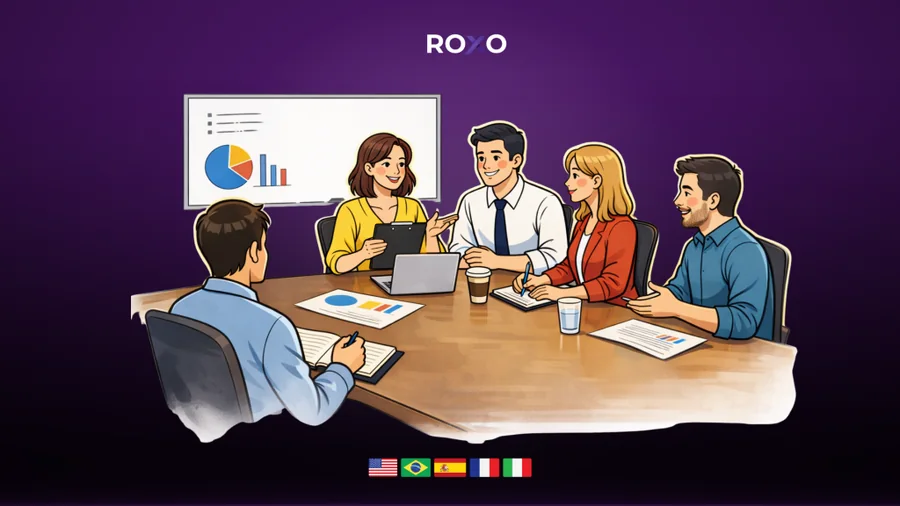
If your company translates regularly, marketing assets, HR policies, contracts, training materials, product documentation, translation can quickly shift from a simple task to an operational dependency. When translation is treated as “one-off requests,” teams often end up in a cycle of revisions, inconsistent terminology, and last-minute rushes.
That cycle has a name: rework.
Rework is costly, not only because it adds hours to the process, but because it creates uncertainty. Teams can’t plan launches, legal can’t finalize documents, and marketing can’t keep messaging consistent across regions. The solution isn’t “translate faster.” The solution is to build a translation partnership for businesses, a repeatable system that makes translation predictable, consistent, and scalable.
This guide explains what a translation partnership is, how it works, common mistakes to avoid, and practical steps to implement it.
Contents
- What is a translation partnership for businesses?
- Signs your company needs a partnership (not one-off translation)
- Why partnerships reduce rework and increase predictability
- Where a translation partnership helps most
- The essential elements of a strong translation partnership
- Common mistakes to avoid
What is a translation partnership for businesses?
A translation partnership is an ongoing relationship between your company and a specialized provider designed to deliver translation with consistent quality, stable workflows, and reliable turnaround.
Unlike one-off translation jobs, a partnership includes the operational pieces that reduce rework:
A defined glossary and key terminology
A style guide that matches your brand tone and voice
A standardized intake process (who requests, what they provide, how it’s approved)
Service-level expectations (turnaround times by priority)
Quality assurance steps (editing, review, and consistency checks)
In short: you don’t just “get translations.” You manage translation as a business process.
Signs your company needs a partnership (not one-off translation)
If any of these sound familiar, a translation partnership will likely pay for itself:
1) Marketing assets don’t sound consistent
Different translators or tools lead to different word choices, tone, and messaging. That inconsistency lowers trust and conversion, especially in paid media where every word impacts CTR.
2) Legal and compliance spend time correcting language
Even small ambiguity in translated terms can create delays and risk. A partnership helps standardize key legal terminology and formatting.
3) HR and training can’t scale globally
Onboarding materials, policies, and internal communications need consistency and speed. When translation is unpredictable, the employee experience suffers.
4) Product and operations deal with confusion
Manuals, SOPs, and internal documentation require clarity. If translation is inaccurate or inconsistent, it can drive mistakes, support tickets, and process friction.
5) Your team can’t predict delivery or cost
When every request is treated as a custom emergency, you lose planning ability. Predictability becomes the real value.
Why partnerships reduce rework and increase predictability
Rework happens when translation starts from scratch every time. Partnerships reduce rework by building shared context.
Key wins:
Consistent terminology: the same term is used across documents and teams.
Faster approvals: reviewers see fewer surprises.
Stable turnaround: delivery timelines become reliable.
Cost control: fewer revisions and rush requests reduce total cost.
Higher brand trust: your message sounds like one company, not five vendors.
Where a translation partnership helps most
Marketing and Sales
Consistent messaging across ads, landing pages, emails, and brochures
Fewer rewrites due to tone mismatch
Better alignment between paid ads and on-page content (improves conversion)
Legal and Compliance
Standardized legal language and formatting
Reduced risk from ambiguity
Predictable timelines for time-sensitive filings
Human Resources
Onboarding and internal policies in multiple languages
Better employee communication and clarity
Less back-and-forth with managers and reviewers
Product, Support, and Operations
Documentation, help centers, UI strings, and training materials
Lower support burden caused by confusing language
Better customer experience in multilingual markets
The essential elements of a strong translation partnership
A real partnership is built on repeatability. Here are the components that matter:
1) Glossary + approved terminology
Your company already has a language: product names, processes, job titles, compliance terms. A glossary prevents endless “Which word should we use?” debates.
2) Style guide for tone and voice
Do you write formal or friendly? Technical or simplified? “You” or “your team”? Once this is defined, translation becomes consistent across channels.
3) Smart review process
Not everything needs the same review level. A contract is different from an Instagram post. Define review levels and avoid wasting time.
4) Service levels (SLA) by urgency
Example:
-
Urgent: 24 hours
-
Standard: 48-72 hours
-
Bulk volume: scheduled delivery
SLA removes uncertainty and keeps your team out of crisis mode.
5) One clear workflow and point of contact
When translation requests are spread across emails, chat messages, and random documents, mistakes multiply. A single structured intake reduces friction.
Common mistakes to avoid
Mistake #1: Choosing based on lowest price
Cheap translation becomes expensive when your team spends hours rewriting or fixing terminology.
Mistake #2: Not defining terminology early
Without a glossary, every translation becomes a debate. That creates rework forever.
Mistake #3: Treating everything as urgent
Constant urgency breaks any process and reduces quality. Use SLA tiers to keep operations stable.
Mistake #4: Using machine translation without review
It can be helpful for speed, but without professional review it increases risk and can harm brand trust.
Mistake #5: Not measuring outcomes
If translation impacts marketing, measure the downstream metrics:
-
CTR, CPC, conversion rate, lead quality
-
Bounce rate and time on page
-
Support ticket volume in multilingual markets
Practical steps to implement a partnership (fast)
If you want fewer revisions within 2-4 weeks, start here:
-
List your top recurring content types (marketing, legal, HR, ops).
-
Identify 30-60 key terms that must stay consistent.
-
Define tone (brand voice) in 5-10 bullet points.
-
Create a simple intake checklist for every request:
-
Source file + target language
-
Audience + purpose
-
Deadline tier (urgent/standard/bulk)
-
Preferred terms (if any)
-
-
Run a pilot: 2-3 content types, then expand.
How Roxo Translations supports business partnerships
At Roxo Translations, we help business teams reduce translation friction through consistent terminology, clear workflows, and predictable delivery, so translation becomes an operational advantage, not a bottleneck.
If your company is tired of endless revisions and inconsistent messaging, a partnership is the next step.
Conclusion
Translation shouldn’t be a recurring emergency. With the right partnership, translation becomes predictable, consistent, and scalable, reducing rework and improving execution across marketing, legal, HR, and operations.
Related topics: business translation services | corporate translation | managed translation services | multilingual business communication | translation workflow management
Artículo relacionado: Traducción Certificada aceptada por USCIS: Guía completa















 Birth Certificate
  Marriage Certificate
  Divorce Documents
  Academic Transcripts
  Medical Records
  Diploma
  Legal Contract
  Rental Contract
  Patent Application
  Statement
  Death Certificates
  Financial Statement
  Sworn Affidavits
  Driving License
  Vaccination Record
 Arabic
  Chinese
  French
  German
  Italian
  Japanese
  Korean
  Portuguese
  Russian
  Spanish
  Vietnamese