Visa and travel agencies don’t lose time because clients are “slow.” Most delays happen after the paperwork starts, when documents arrive incomplete, names don’t match across forms, dates appear in different formats, or translations lack consistency. One small detail turns into back-and-forth messages, reprints, resubmissions, and stress for everyone.
A translation partner isn’t just someone who converts words. For visa and travel agencies, a reliable translation partner is part of your production system: they help you standardize document intake, reduce preventable errors, and deliver cleaner packages that move forward with fewer surprises.
This guide breaks down what an effective translation partnership looks like, the most common pitfalls agencies face, and practical steps you can implement today to improve turnaround time and client experience.
Contents
- Why translation quality affects your agency’s revenue
- The documents agencies handle most (and where errors happen)
- What a real translation partnership should include
- Practical steps to reduce revisions immediately
- Common mistakes agencies should avoid
- Professional recommendations to convert more clients
- Final takeaway
Why translation quality affects your agency’s revenue
Every time you correct a document, you spend labor. Every time a client gets nervous about delays, your team spends emotional energy. And every time a case drags out, you reduce capacity to take on new clients.
A strong translation process improves:
Speed: fewer revisions and resends
Consistency: names, dates, and key terms match across the full package
Confidence: your agency looks organized and professional
Conversion: faster response times and fewer “uncertain” moments for clients
In competitive markets, the agencies that win are the ones that deliver predictably.
The documents agencies handle most (and where errors happen)
1) Identity and civil records
Passports
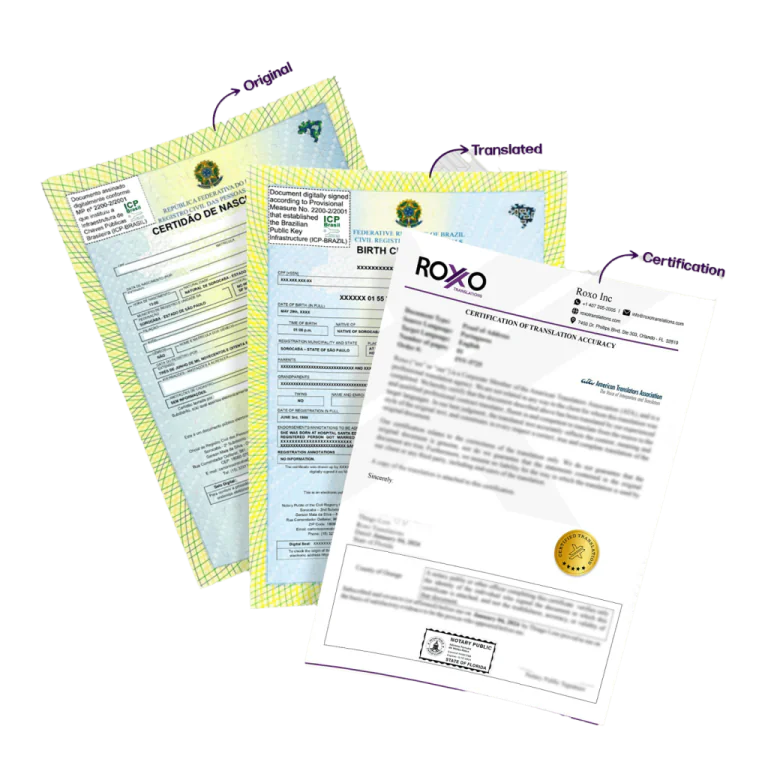
Birth certificates
Marriage/divorce certificates
National IDs
Common issues: inconsistent spelling, missing middle names, different last-name order, accents/diacritics handled inconsistently, partial scans.
2) Financial support documents
Bank statements
Pay stubs
Tax documents
Employment letters
Common issues: unclear formatting of numbers and dates, missing pages, translated headings not matching the original layout, terminology inconsistency.
3) Education and background
Diplomas
Transcripts
Certificates
Reference letters
Common issues: job titles and school names translated inconsistently, unclear grade scales, missing seals/stamps in scans.
4) Travel and purpose-of-trip documents
Itineraries and reservations
Invitation letters
Supporting statements
Forms and declarations
Common issues: translations that are too literal, formatting mismatches, names not aligned with the passport.
What a real translation partnership should include
A “vendor” delivers files. A partner improves your workflow.
1) Standardization (the #1 rework reducer)
A partner helps enforce consistent rules:
Client name format based on the passport
Date format consistency (avoid DD/MM vs MM/DD confusion)
Repeated terms translated the same way every time
This alone can eliminate the majority of revisions.
2) Real quality control
Not “spell-check”, real QA that flags:
discrepancies across documents
missing pages
low-quality scans
fields that require confirmation before translating
3) A simple request system for your team
If the process is complicated, mistakes happen. A good partnership provides:
a clear intake checklist
file naming standards
confirmation of target language and document purpose
reliable turnaround expectations
4) Support for imperfect client submissions
Many clients send screenshots, cropped images, or photos with glare. A good partner catches issues early and protects your timeline.
Practical steps to reduce revisions immediately
Step 1: Use the passport as the “source of truth”
Make the passport name the official standard for:
spelling
order (first/middle/last)
abbreviations (avoid them)
Then apply that same format across all documents.
Step 2: Use a pre-translation checklist
Before sending documents out, confirm:
all pages are included
the scan is readable
the client name matches the passport
the agency knows the destination and deadline
Step 3: Set quality rules for photos and scans
Minimum standards reduce problems:
no cropped edges
no shadows/glare
full page visible
correct orientation
no filters
Step 4: Keep a client translation history
Clients often return with new documents. Consistency improves speed and reduces edits.
Step 5: Avoid “urgent mode” as your default
Constant urgency increases error risk. Predictable delivery reduces stress and improves output quality.
Common mistakes agencies should avoid
1) Choosing speed over consistency
Fast translations that require fixes are slower in practice.
2) Not validating names and dates up front
Name/date mismatches are the most frequent cause of corrections.
3) Using multiple providers without a standard
Different styles and terminology increase inconsistency across the package.
4) Requesting translation without context
A document for a visa package may need different formatting and terminology than a general translation.
Professional recommendations to convert more clients
Offer “visa document translation” as a built-in service, not an add-on
Package pricing by case type (basic ID set + financial + education)
Position the value clearly: “consistent, ready-to-submit documents”
Use speed as a benefit, but lead with accuracy and fewer delays
Clients don’t want “translation.” They want peace of mind.
Final takeaway
A translation partnership for visa and travel agencies should deliver three outcomes:
Consistency across the entire package
Quality control that prevents avoidable issues
Predictable turnaround that stabilizes your operation
If your agency wants certified translations that reduce rework and help you move cases faster, Roxo Translations can support your workflow.
Related topics: marriage certificate translation near me | certified translation services | USCIS document translation | certified translator near me | document translation services Related article: Certified Translations for USCIS: Everything You Need to Know












 Birth Certificate
  Marriage Certificate
  Divorce Documents
  Academic Transcripts
  Medical Records
  Diploma
  Legal Contract
  Rental Contract
  Patent Application
  Statement
  Death Certificates
  Financial Statement
  Sworn Affidavits
  Driving License
  Vaccination Record
 Arabic
  Chinese
  French
  German
  Italian
  Japanese
  Korean
  Portuguese
  Russian
  Spanish
  Vietnamese