If you’re in San Diego and preparing paperwork for immigration, school, work, or legal matters, you already know the truth: documents don’t forgive mistakes. A small error like a misspelled name, missing stamp, or an unclear date format can slow your process down, trigger a request for evidence, or force you to redo everything under pressure.
That’s why people search for certified translation San Diego and certified translator near me when the stakes are real. Certified translation isn’t just “translation.” It’s a complete, accurate, and properly formatted document package designed to be accepted the first time.
This guide will walk you through what certified translation means, when you need it, common mistakes to avoid, and how to choose a translation provider in San Diego you can trust.
Contents
- What is a certified translation?
- When do you need certified translation in San Diego?
- What “complete translation” really means
- Common mistakes that cost time (and money)
- Conclusão
- Tips to prepare your documents (and speed up delivery)
- Final pre-submission checklist
- Roxo Translations in San Diego: accuracy you can trust
What is a certified translation?
A certified translation is a translation delivered with a signed certification statement confirming that:
the translation is complete and accurate, and
the translator (or translation company) is qualified to translate between the languages involved.
In practical terms, certified translations are often required for official purposes where the receiving organization needs confidence that the translated document matches the original.
When do you need certified translation in San Diego?
A good rule: if you’re submitting a non-English document to an institution in the U.S., you may need a certified translation.
Common scenarios in San Diego include:
Immigration paperwork (USCIS and related processes)
Education (transcripts, diplomas, enrollment documents)
Employment (HR verification, professional licensing)
Legal processes (court documents, affidavits, contracts)
Vital records (birth certificates, marriage certificates, divorce decrees)
If you’re unsure, ask yourself: Is this document being submitted for an official decision? If yes, certified translation is usually the safe choice.
Most translated documents (and why they cause issues)
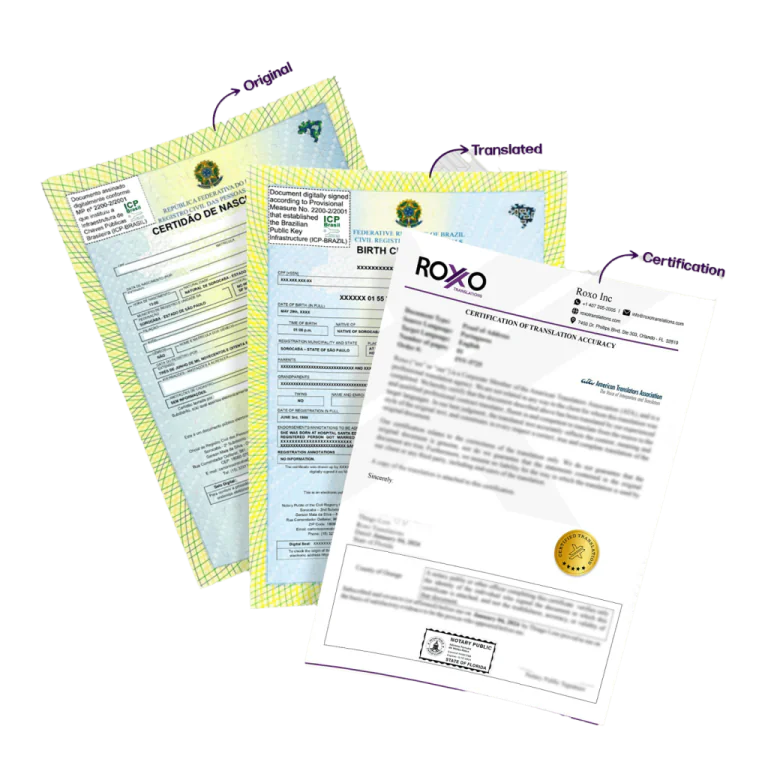
1) Birth certificates
Common issues:
inconsistent spelling of names and surnames
missing accents or special characters
date confusion (DD/MM/YYYY vs MM/DD/YYYY)
leaving out stamps, seals, or handwritten notes
2) Marriage certificates
Common issues:
missing marginal notes or official registry references
incomplete translation of stamps and signatures
formatting that makes it hard to compare to the original
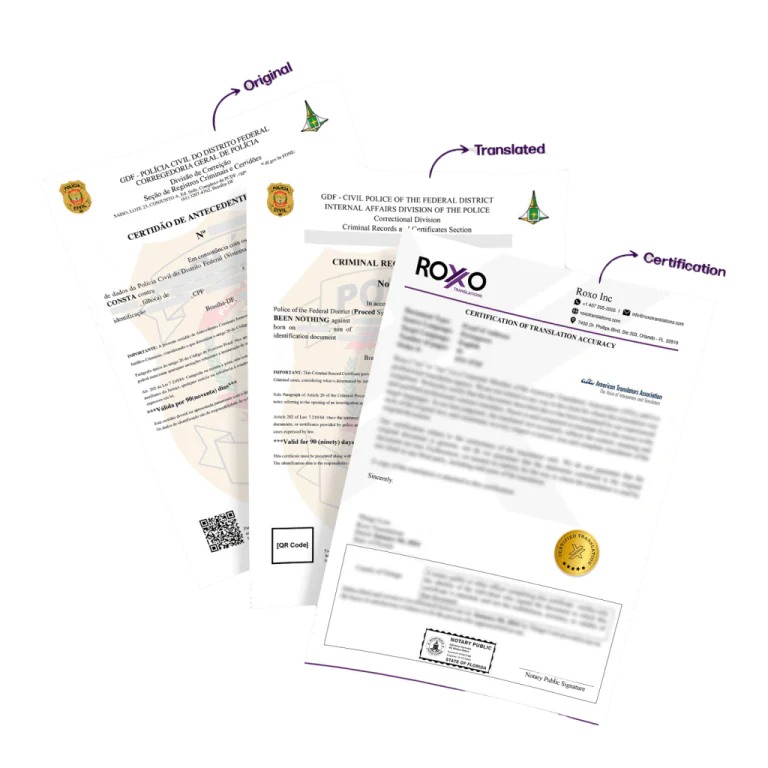
3) Legal documents (court records, police certificates)
Common issues:
literal translations that don’t match legal meaning
missing attachments
inconsistent terminology across pages
4) Academic transcripts and diplomas
Common issues:
inconsistent course names
grade scale confusion
missing remarks or administrative notes
What “complete translation” really means
One of the biggest reasons documents get rejected is simple: the translation is incomplete.
A complete certified translation typically includes:
-
stamps, seals, signatures (translated or clearly described)
-
handwritten notes and annotations
-
registry numbers, reference codes, and official remarks
-
all pages (including “blank-looking” pages that contain codes)
-
attachments like apostilles when relevant
When a provider tells you “we only translate the main text,” that can be risky, because official reviewers often expect everything on the document to be represented.
Common mistakes that cost time (and money)
Mistake 1: Using machine translation for official documents
Machine translation can sound decent, but it often fails on:
names and consistency
formal phrasing
stamps, abbreviations, and formatting
specialized terminology
Fix: Use professional certified translation.
Mistake 2: Name inconsistencies across documents
Many clients have multiple surnames or variations with accents. If the translation changes the way your name appears from one document to another, you could face delays.
Fix: Use a consistent naming standard and apply it across the full packet.
Mistake 3: Date format confusion
A date like 03/04/2020 can be interpreted in two ways.
Fix: A professional translator interprets the date based on the issuing country and formats it clearly in English.
Mistake 4: Missing stamps, seals, or notes
Even if you think a stamp “doesn’t matter,” an officer or reviewer may disagree.
Fix: Ensure stamps and notes are included, translated or described.
Mistake 5: Poor formatting
If a reviewer can’t quickly compare the translation to the original, it creates friction and increases the chance of questions.
Fix: Choose a provider that formats translations clearly and professionally.
Conclusão
Use this practical checklist before you order:
1) Do they provide a signed certification?
Ask directly: “Does the translation include a certification statement?”
2) Do they translate everything on the page?
You want a provider that includes stamps, notes, and supporting text.
3) Are they experienced with your use case?
Immigration, academic, and legal documents each have expectations.
4) Do they prioritize accuracy over speed “at any cost”?
Fast is great, but not if it increases mistakes. You want fast and accurate.
5) Is communication clear?
A reliable service helps you understand what to send, how to scan it, and what to expect.
Tips to prepare your documents (and speed up delivery)
Send clear scans or photos (no shadows, no blur).
Include front and back.
Include every page, even if it seems blank.
If there’s an apostille, include it.
Tell the provider what the translation is for (immigration, school, etc.).
Share your preferred name spelling exactly as used in your U.S. paperwork.
These simple steps help avoid rework and delays.
Final pre-submission checklist
? All pages includedTranslation is complete (stamps/notes included)
Certification statement is signed
Names match across documents
Dates are clear and properly formatted
Layout is easy to compare to original
Roxo Translations in San Diego: accuracy you can trust
When you need certified translations in San Diego, the goal is acceptance and peace of mind not just “a translation.”
At Roxo Translations, we focus on:
high-accuracy certified translations
complete coverage (including stamps and notes)
clear, professional formatting
support for immigration, academic, legal, and vital documents
If your process matters, your translation should be done right the first time.
Related topics: certified translator near me | certified translations near me | document translation services San Diego | USCIS certified translation San Diego | translation services San DiegoRelated article: Certified Translations for USCIS: Everything You Need to Know











 Birth Certificate
  Marriage Certificate
  Divorce Documents
  Academic Transcripts
  Medical Records
  Diploma
  Legal Contract
  Rental Contract
  Patent Application
  Statement
  Death Certificates
  Financial Statement
  Sworn Affidavits
  Driving License
  Vaccination Record
 Arabic
  Chinese
  French
  German
  Italian
  Japanese
  Korean
  Portuguese
  Russian
  Spanish
  Vietnamese