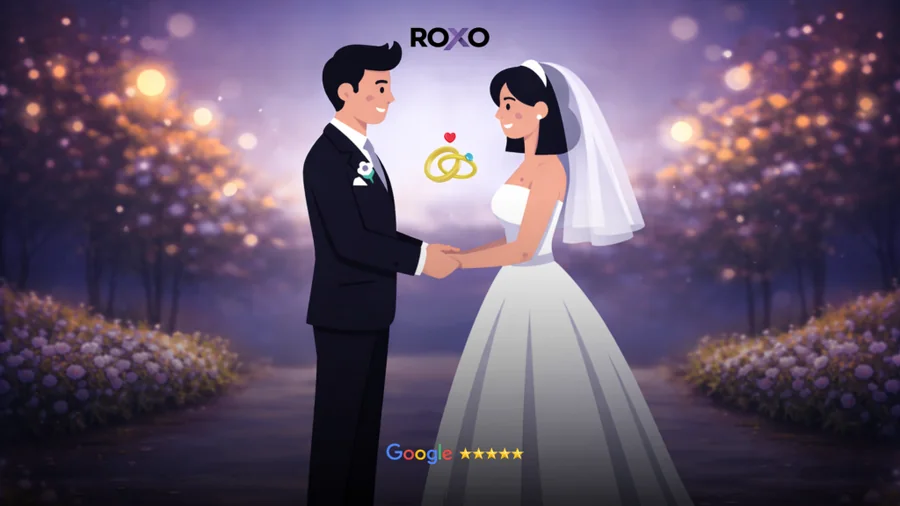
If you’re applying for immigration, updating your legal status, enrolling in a program, or handling any official process in the U.S., your marriage certificate may be required. When the document is not in English, a simple translation is not enough, most institutions expect a certified marriage certificate translation that is accurate, complete, and properly formatted.
A small mistake can slow down your case, create unnecessary back-and-forth, or even lead to a rejection. This article explains when you need a certified translation, what “certified” means, the most common errors, and how to prepare your document so it gets accepted the first time.
Contents
- When do you need a marriage certificate translation?
- What is a “certified translation”?
- Why marriage certificate translations get delayed or rejected
- What a proper marriage certificate translation should include
- How to prepare your document for a fast, accurate translation
- Why getting it right the first time matters
- Roxo Translations: Certified translations you can trust
- Quick checklist before submission
When do you need a marriage certificate translation?
A marriage certificate translation is commonly requested for:
USCIS and immigration filings (adjustment of status, petitions, naturalization, etc.)
Visa applications and consular procedures
Name change processes (after marriage)
School or university enrollment (dependent status)
Court cases and legal matters
Insurance and benefits verification
Because it involves identity and marital status, agencies review it carefully, especially when it supports a family-based immigration case.
What is a “certified translation”?
A certified translation is a translation delivered with a signed certification statement confirming:
the translation is complete and accurate
the translator is competent in both languages
the translation matches the source document
This certification is often required for USCIS and other official submissions.
Certified vs. notarized: not the same thing
Many people confuse the two:
Certified translation: includes a translator’s certificate of accuracy.
Notarized translation: the translator’s signature is notarized by a notary public.
Notarization may be requested by specific courts or institutions, but it’s not always mandatory. The safest approach is to confirm the requirement of the receiving office.
Why marriage certificate translations get delayed or rejected
Here are the most common issues we see:
1) Name inconsistencies
Marriage certificates usually include both spouses’ full names. If names are spelled differently across documents (passport, ID, USCIS forms), reviewers may flag it.
Pro tip: confirm the exact spelling used in your official paperwork before finalizing the translation.
2) Date mistakes and formatting confusion
Dates can be written differently depending on country format. A professional translator will convert dates into a clear, unambiguous English format.
3) Missing stamps, seals, signatures, or registry information
Official marriage certificates often contain:
stamps and seals
registry numbers, book/page/entry fields
signatures and issuing authority
additional remarks or amendments
If these elements aren’t translated, the document may be considered incomplete.
4) Partial translations
Only translating the main text and ignoring headings, footer notes, or marginal text can create problems.
5) Machine translation
Automated tools often mistranslate official titles, legal wording, abbreviations, or handwritten notes, and do not include certification.
For official processes, this is a high-risk shortcut.
What a proper marriage certificate translation should include
A complete certified translation typically covers:
spouses’ full names
date and place of marriage
registration details (record number, book/page, act/entry)
issuing authority
stamps, seals, signatures, notes
And it should be formatted clearly so reviewers can compare it quickly with the original.
How to prepare your document for a fast, accurate translation
To avoid delays:
Send a clear scan or photo (no glare, no cropping, readable text).
Include both sides if there’s text on the back.
Tell us the purpose (USCIS, court, school, etc.).
Share deadline expectations if timing is urgent.
Why getting it right the first time matters
With official documents, quality isn’t a luxury, it’s a requirement. A professional certified translation helps you:
avoid resubmissions and extra fees
reduce stress with time-sensitive cases
increase the chance of acceptance on the first review
maintain confidentiality and consistency
Roxo Translations: Certified translations you can trust
At Roxo Translations, we deliver certified translations with attention to names, dates, formatting, and all document details, so you can submit your marriage certificate confidently for official use.
Quick checklist before submission
Full document translated (no missing seals/notes)
Names match your IDs and application forms
Dates are clear and consistent
Certification included
Formatting is easy to review
If you’re not sure what you need, ask before submitting, prevention is cheaper than delays.
Related topics: marriage certificate translation near me | certified translation services | USCIS document translation | certified translator near me | document translation services
Related article: Certified Translations for USCIS: Everything You Need to Know












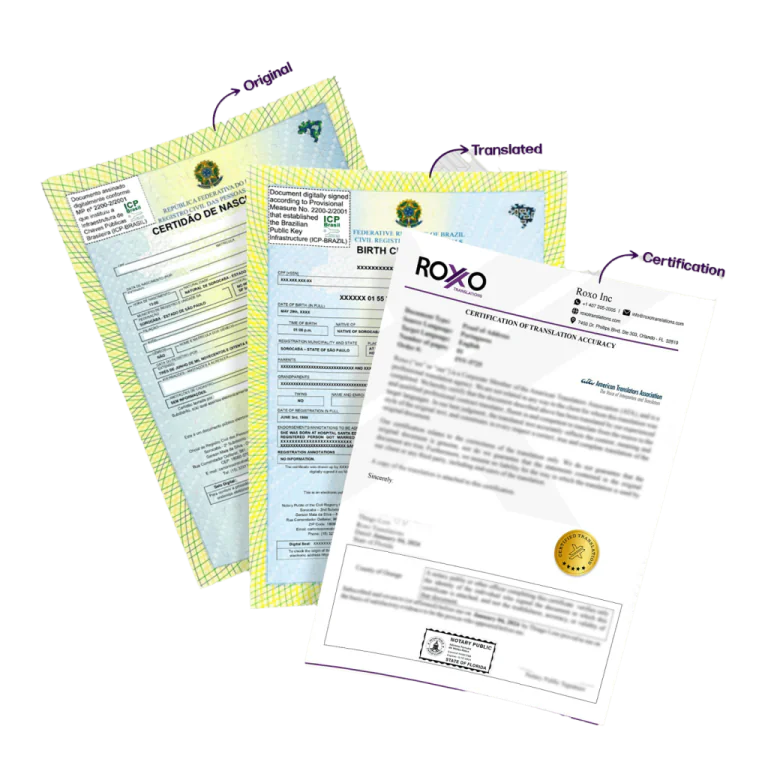
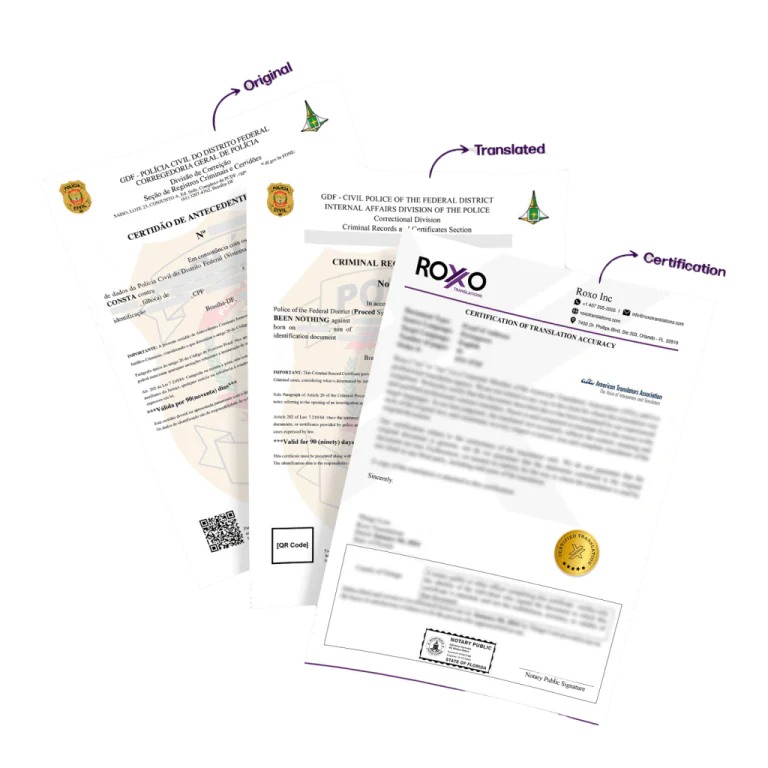
 Birth Certificate
  Marriage Certificate
  Divorce Documents
  Academic Transcripts
  Medical Records
  Diploma
  Legal Contract
  Rental Contract
  Patent Application
  Statement
  Death Certificates
  Financial Statement
  Sworn Affidavits
  Driving License
  Vaccination Record
 Arabic
  Chinese
  French
  German
  Italian
  Japanese
  Korean
  Portuguese
  Russian
  Spanish
  Vietnamese